
Making the Story Garden was a bit like making lunch
Making the Story Garden has always felt to me like making lunch. Before I detail the approach, process and materials used in creating the Story Garden, I should say a bit more about making lunch.
Making lunch at the Story Garden was a process of using limited ingredients, unconventional and ill-suited pots and pans, cooking in cramped conditions (two hot plates in a port-a-cabin), to make a delicious meal for anywhere between 10 to 25 hungry people each day.
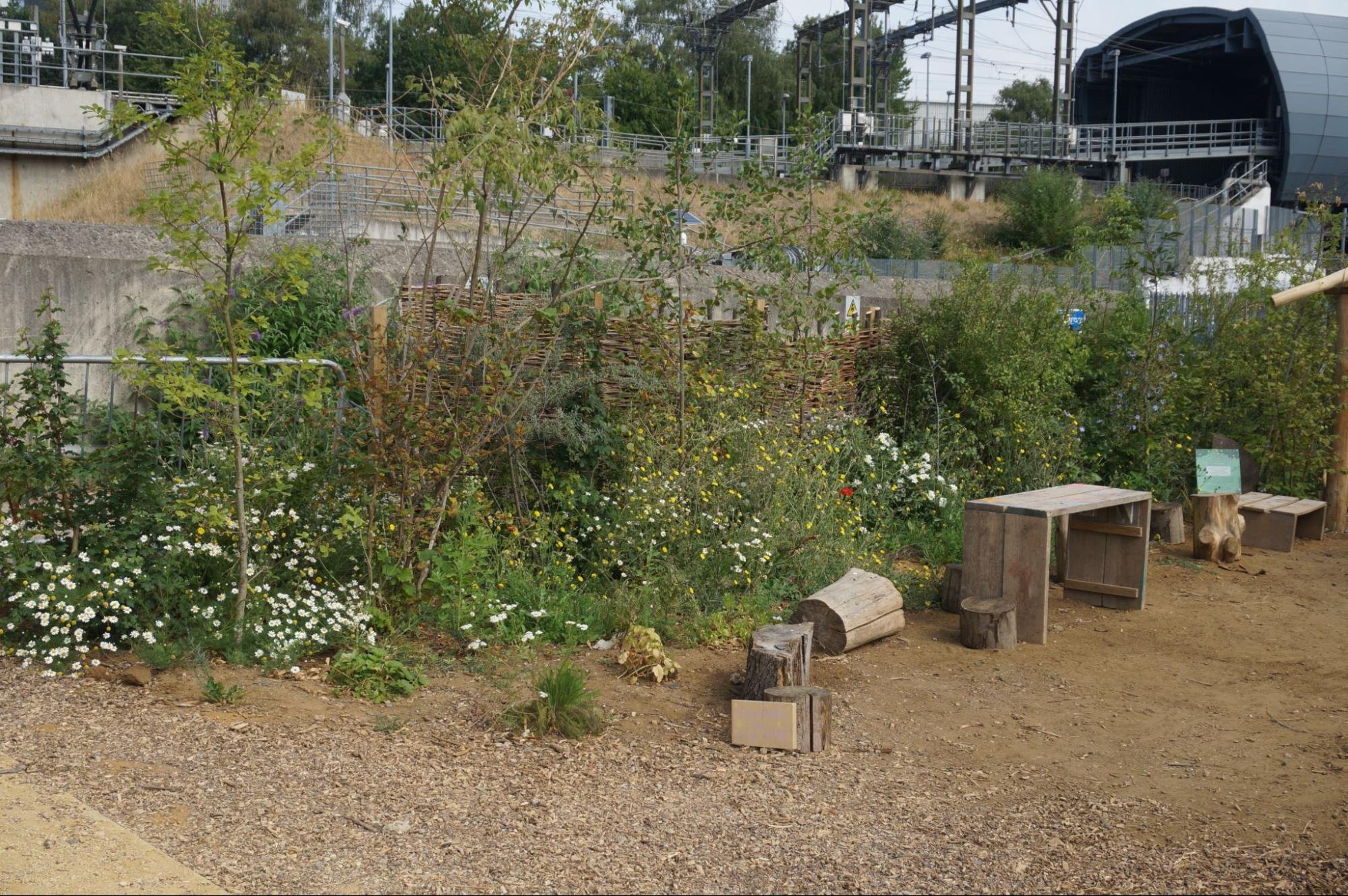
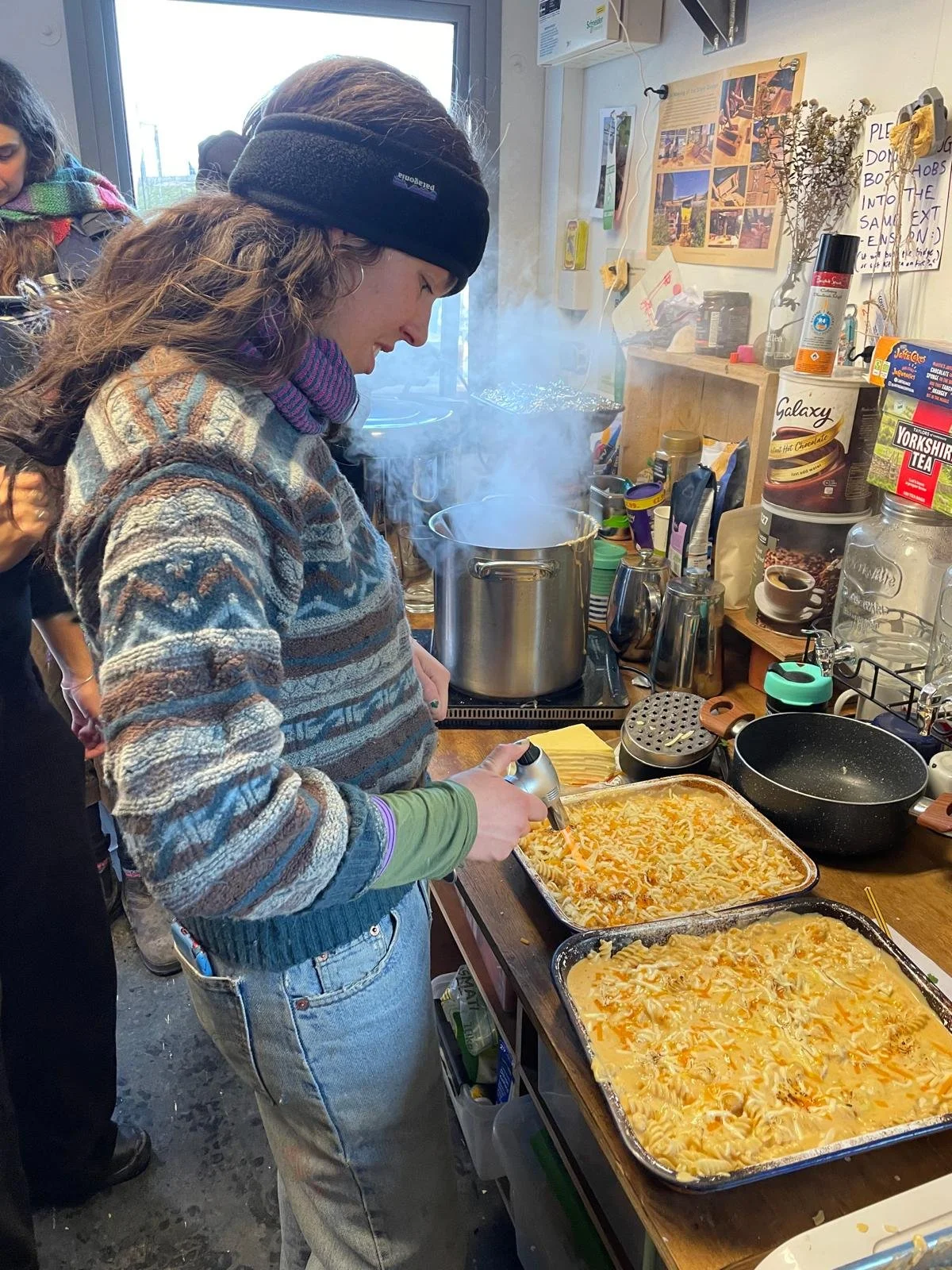
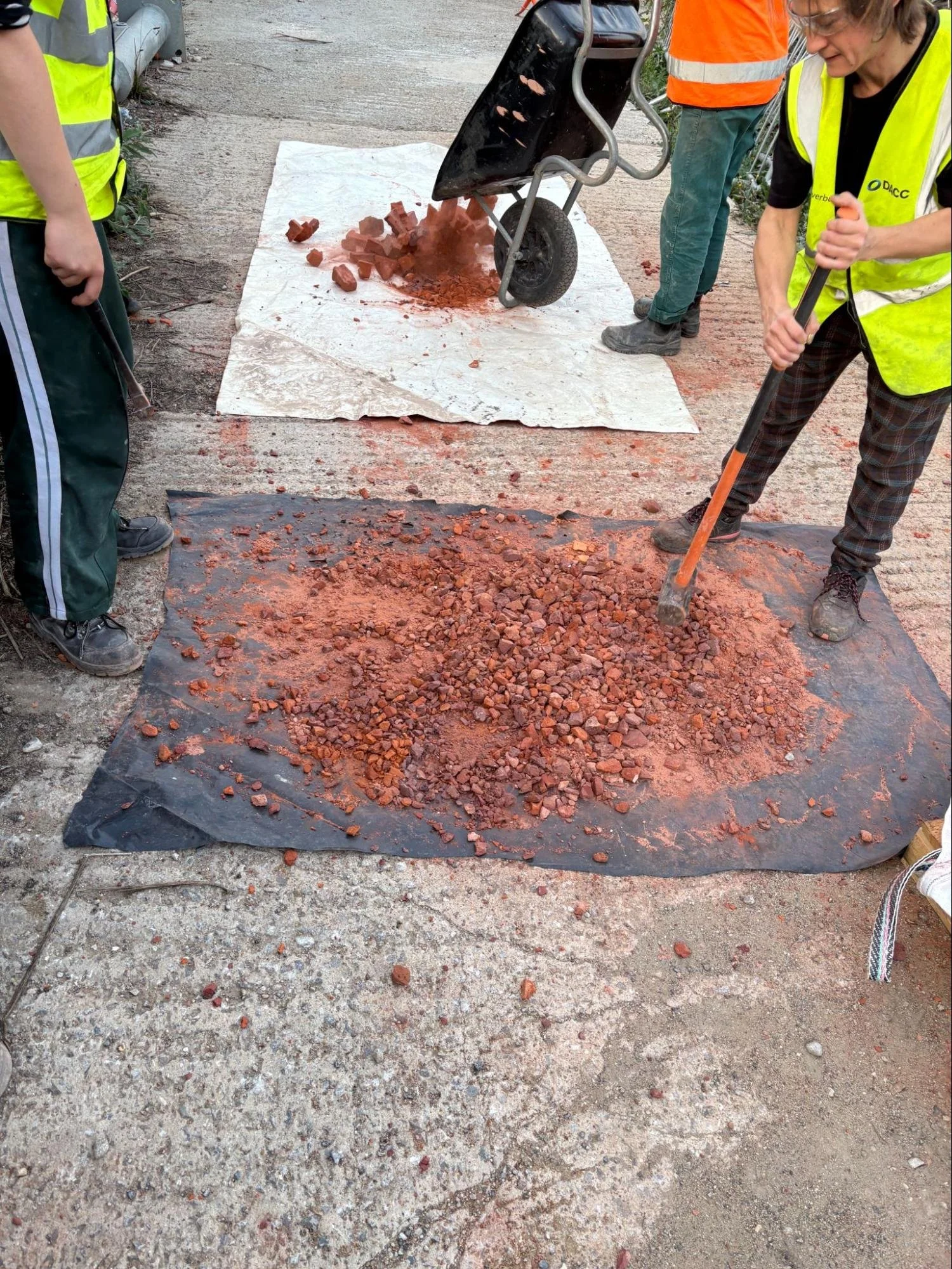
The process of making lunch was always a fun challenge in making something amazing out of very little. It was an exercise in transforming forgotten or unloved materials–too much beetroot, a pallet of broken bricks—into something worthy of sharing–a spiced stew, a biodiverse living roof with a generous depth of free draining substrate.
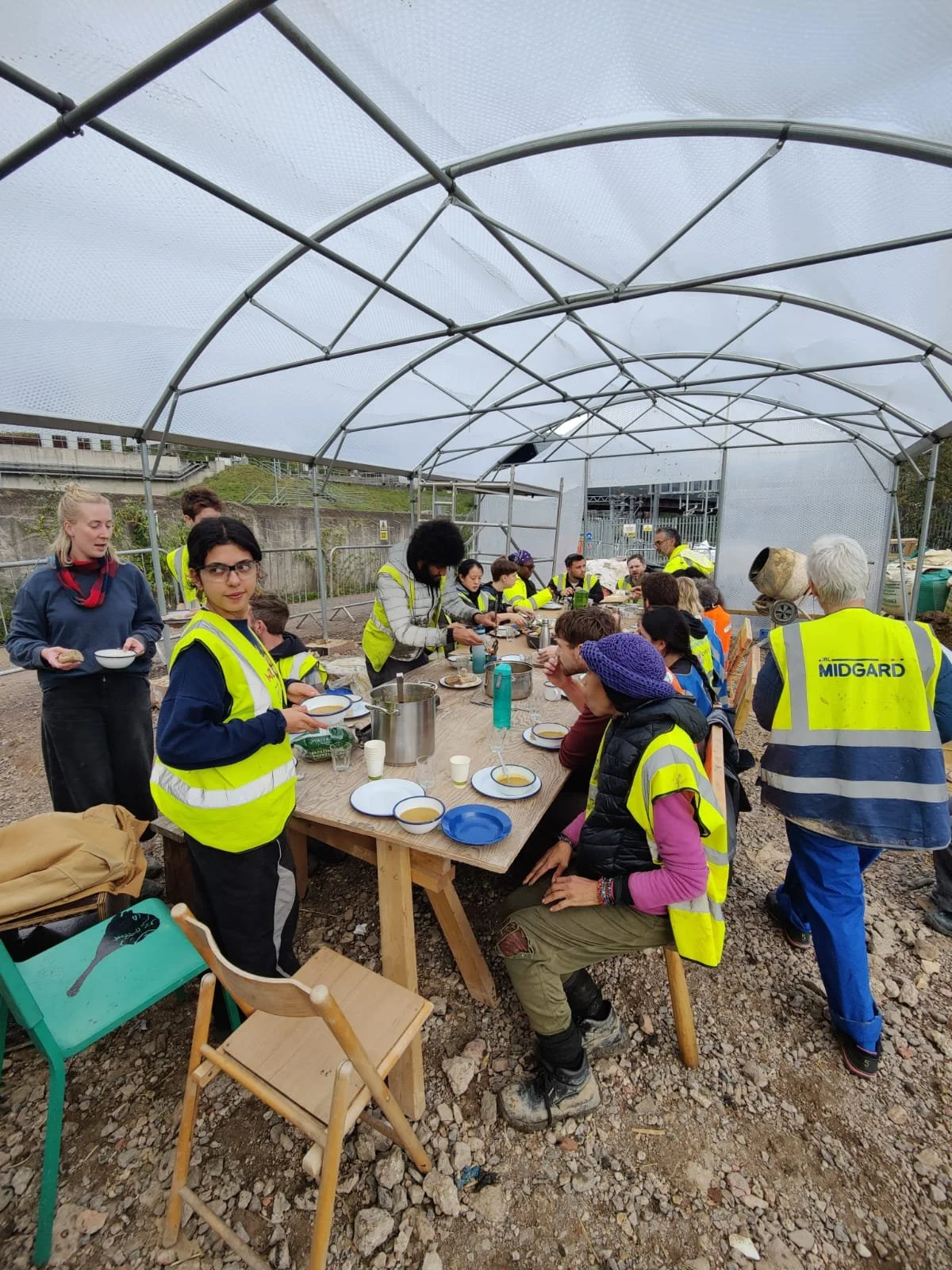
Crucially, lunch was always made to be shared, much like the Story Garden is.
Many bowls of soups, curries, stews, salads and about a year later, the team celebrated the ‘completion’ of the garden.
I write ‘completion’ in inverted commas, because when is a garden ever really completed?
The garden team began work on the garden in September 2025 and in July 2026 we celebrated its opening. During this period, the garden team was focussed on the hard and soft landscaping of the Story Garden. The ‘garden team’ was comprised of two cohorts of trainees (the first cohort was with Betsey, Famke, Izzy and Kian and the second cohort was with Brenn, Jad, Lulu and Theo), Karari, Fran, Holly, loads of help from other talented staff, enthusiastic Generators, and skilled volunteers.
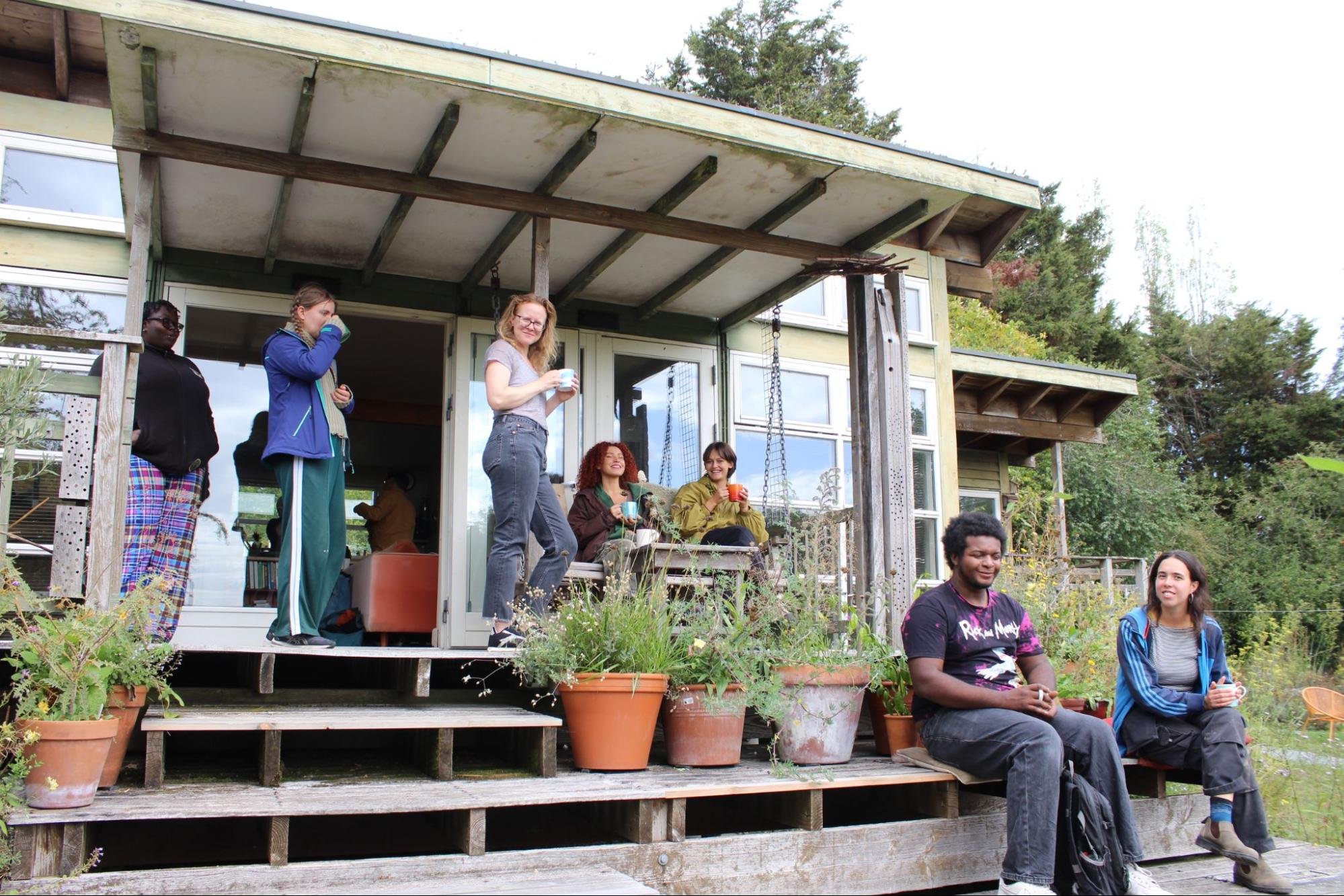
Some of the Garden Team on a visit to John Little’s Garden, Hilldrop in Essex
In 2025 we closed the gates of the Story Garden in its location behind the British Library and the garden team began to move to the Triangle Site where work began to create a new, permanent garden there.
In the extended simile the making of the garden being like making lunch, my intention is to recount this process a bit like a recipe…
Part 1: METHOD / APPROACH
Part 2: INGREDIENTS / MATERIALS
Part 3: STEPS / PROCESS
Part 4: THE MEAL / THE GARDEN
Part 5: EATING / VISITING
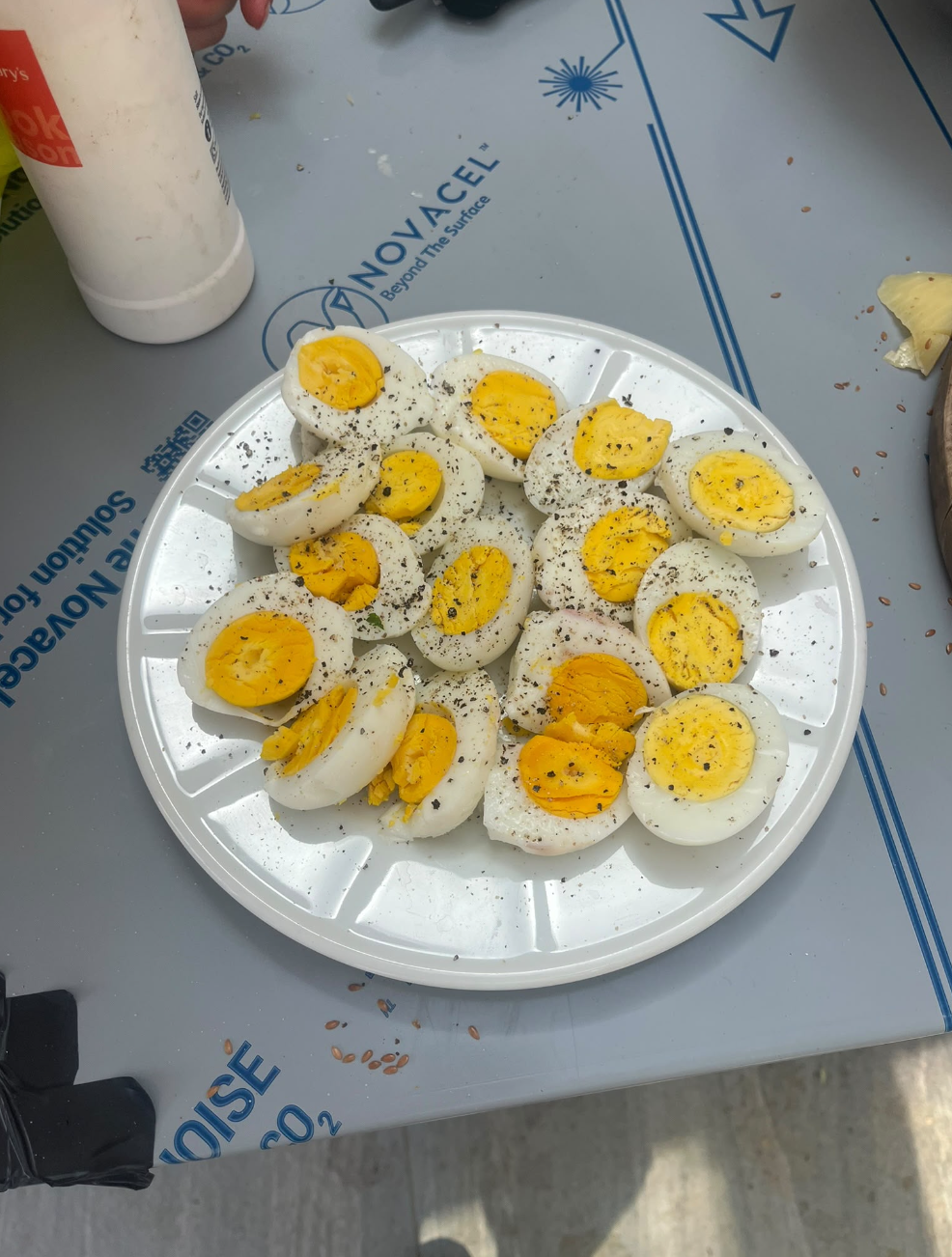
Part of a lunch on a hot summer’s day - boiled eggs for the team, courtesy of the Paper Garden chickens.
PART 1: METHOD / APPROACH
The method in making the Story Garden was one of collaboration. A lot of research was put into the making of the garden via a Permaculture Design Course, various field trips to other gardens for inspiration, and co-design sessions with the garden staff and trainees.
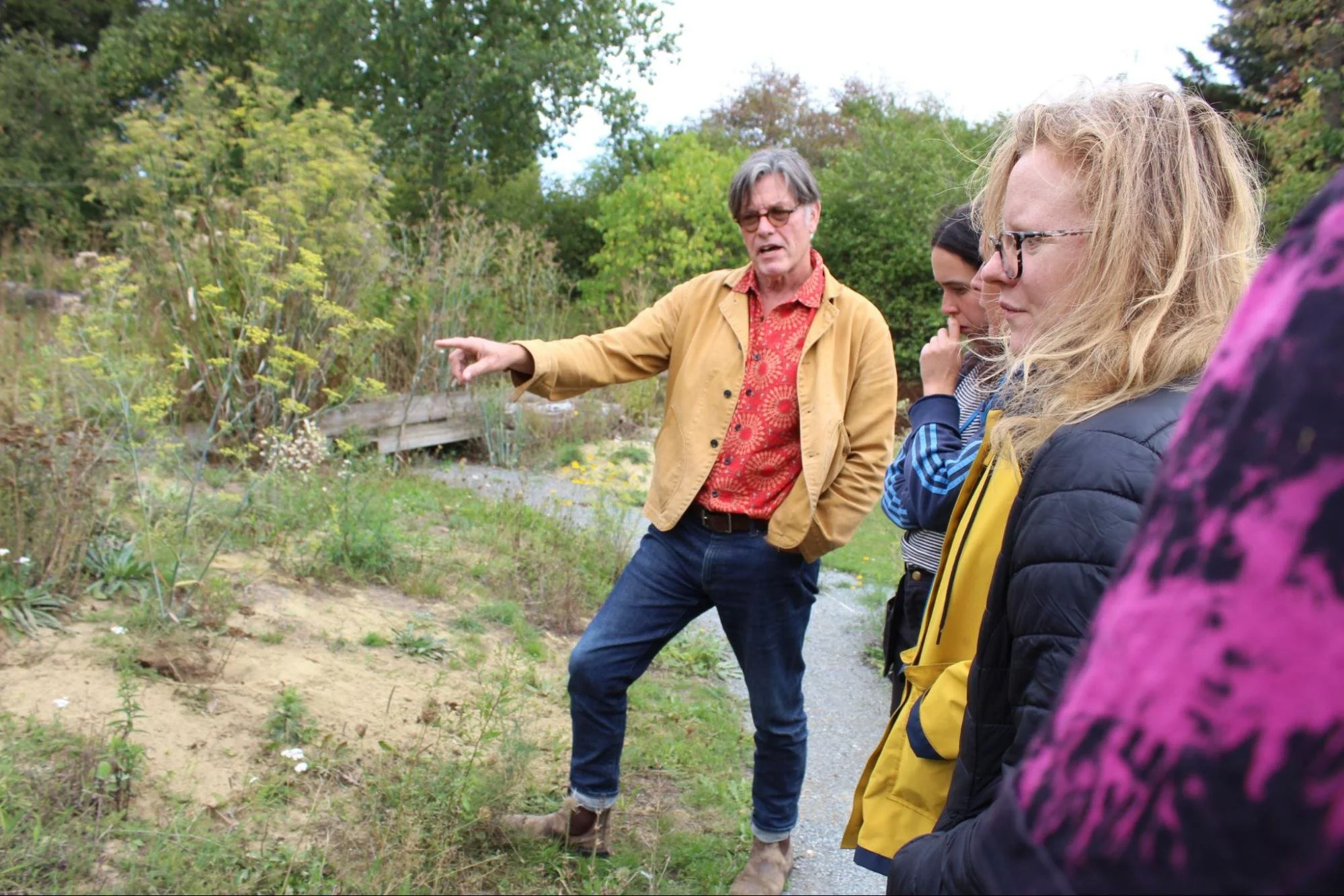
Visit to John Little’s Garden, Hilldrop, in Essex
In September 2025 the Garden Trainees visited John Little’s Garden Hilldrop and brown-roof yard in Barking. We learned about growing in low nutrient soils, using construction waste as a substrate, and simple ways to support wildlife in the garden, like leaving bare sandy soil for solitary bees to nest in. This visit very much inspired the planting of the rubble garden (more later).
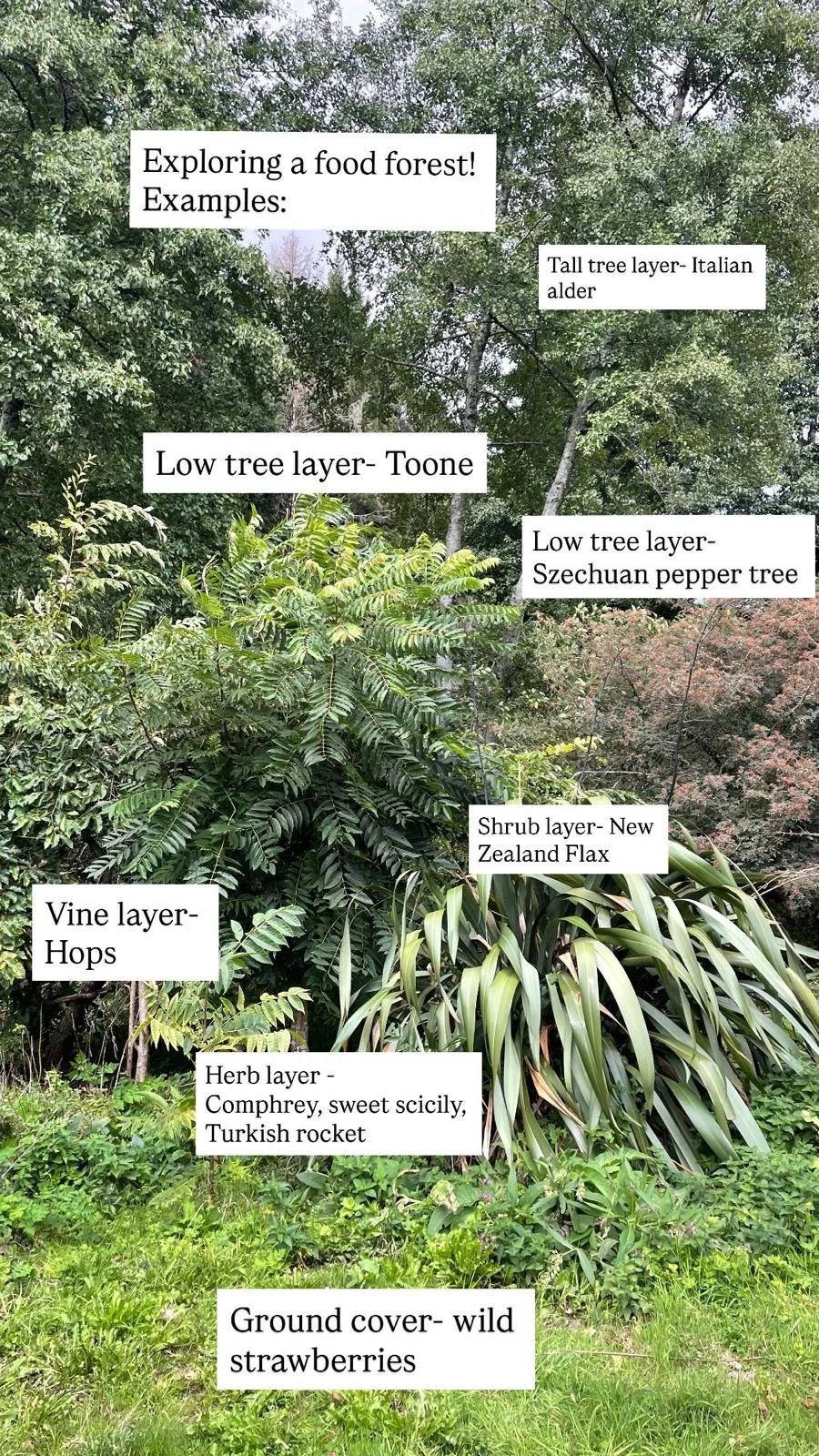
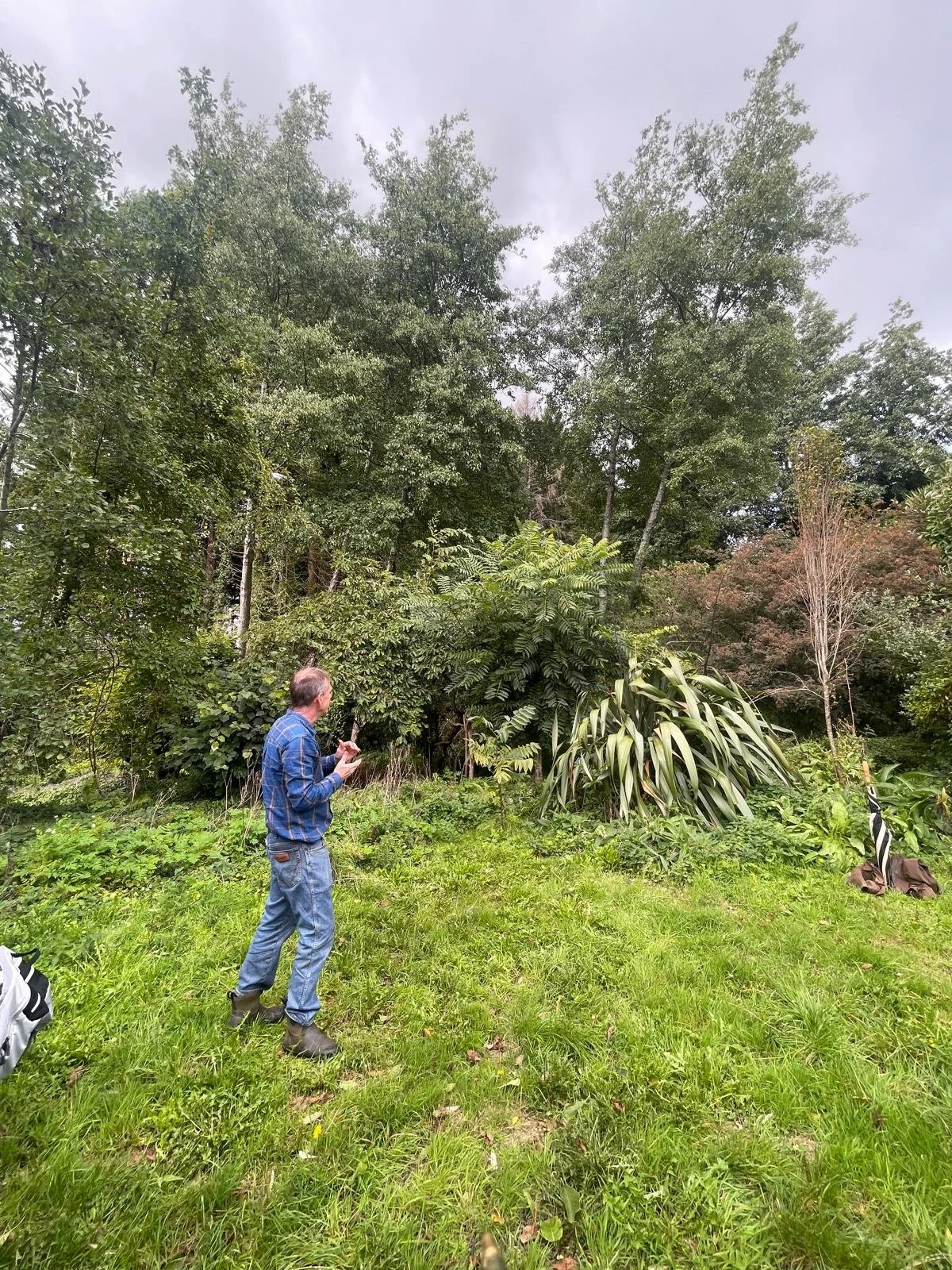
Photos from a visit to Martin Crawford’s Forest Garden
We also visited the Agroforest Research Trust in Totnes to learn from Martin Crawford about Forest Gardening. We were introduced to a lot of common street trees - like small leaved Lime, Cornus kousa, and Toona sinensis, which are all edible. We were inspired by this visit to introduce easily identifiable street trees to the Forest Garden, so that Londoners would be able to learn about the ‘food for free’ growing along their streets. Another tree (albeit less common on London’s streets) that we took away with us from our visit to Crawford’s was the Szechuan Pepper tree, whose Autumn berries produce the mouth numbing spice.
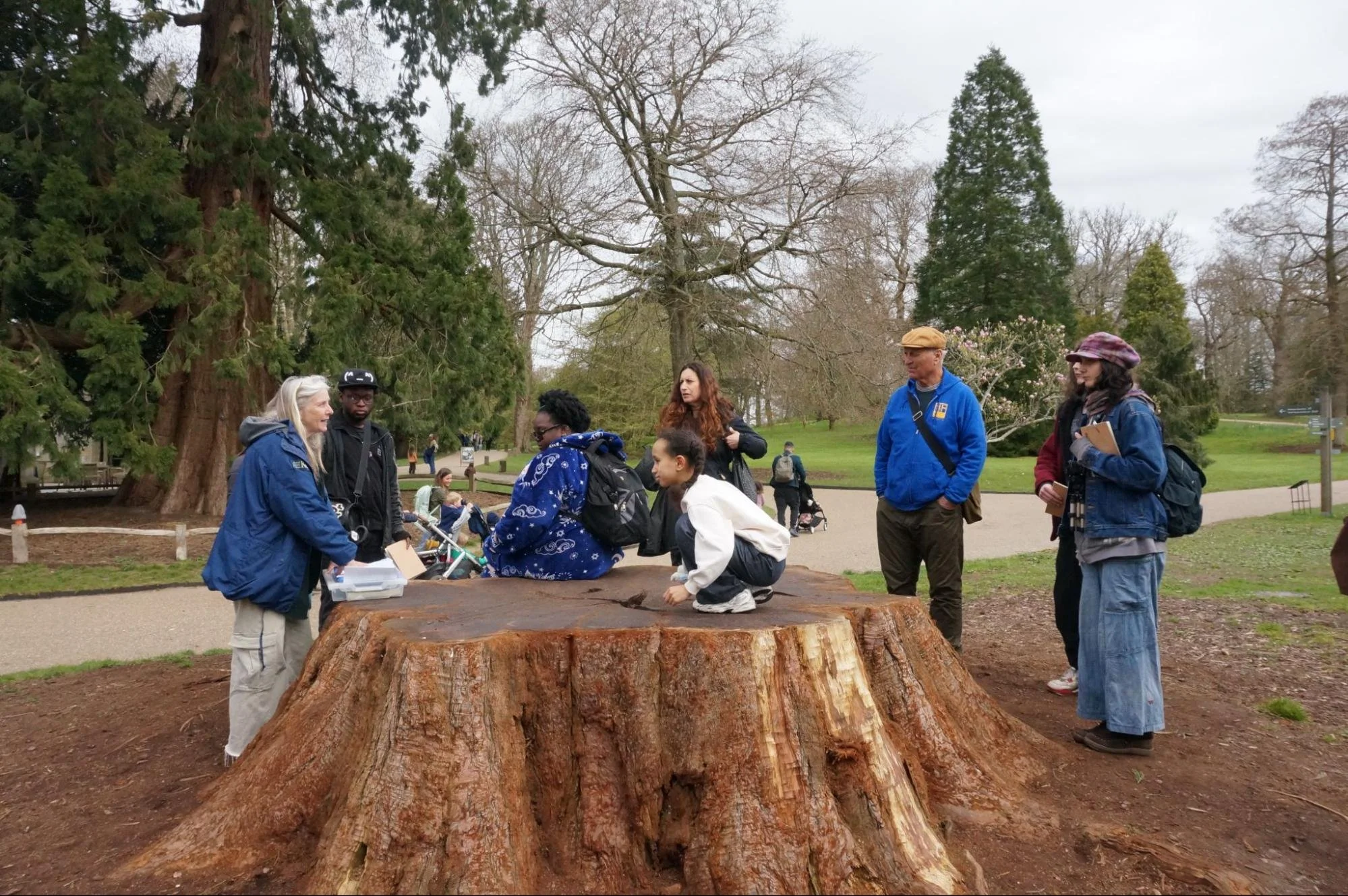
A visit to Kew Wakehurst, to see a more mature garden and learn about the Millennium Seed Bank.
In Spring 2026, we visited the Millennium Seed Bank at Kew Wakehurst. This was an opportunity to dream about the Story Garden in the future. Visiting a mature garden like Wakehurst and learning about the work they are doing to save seeds into the future was inspiring to think about how the Story Garden will look in 100, 300, 500 years’ time.
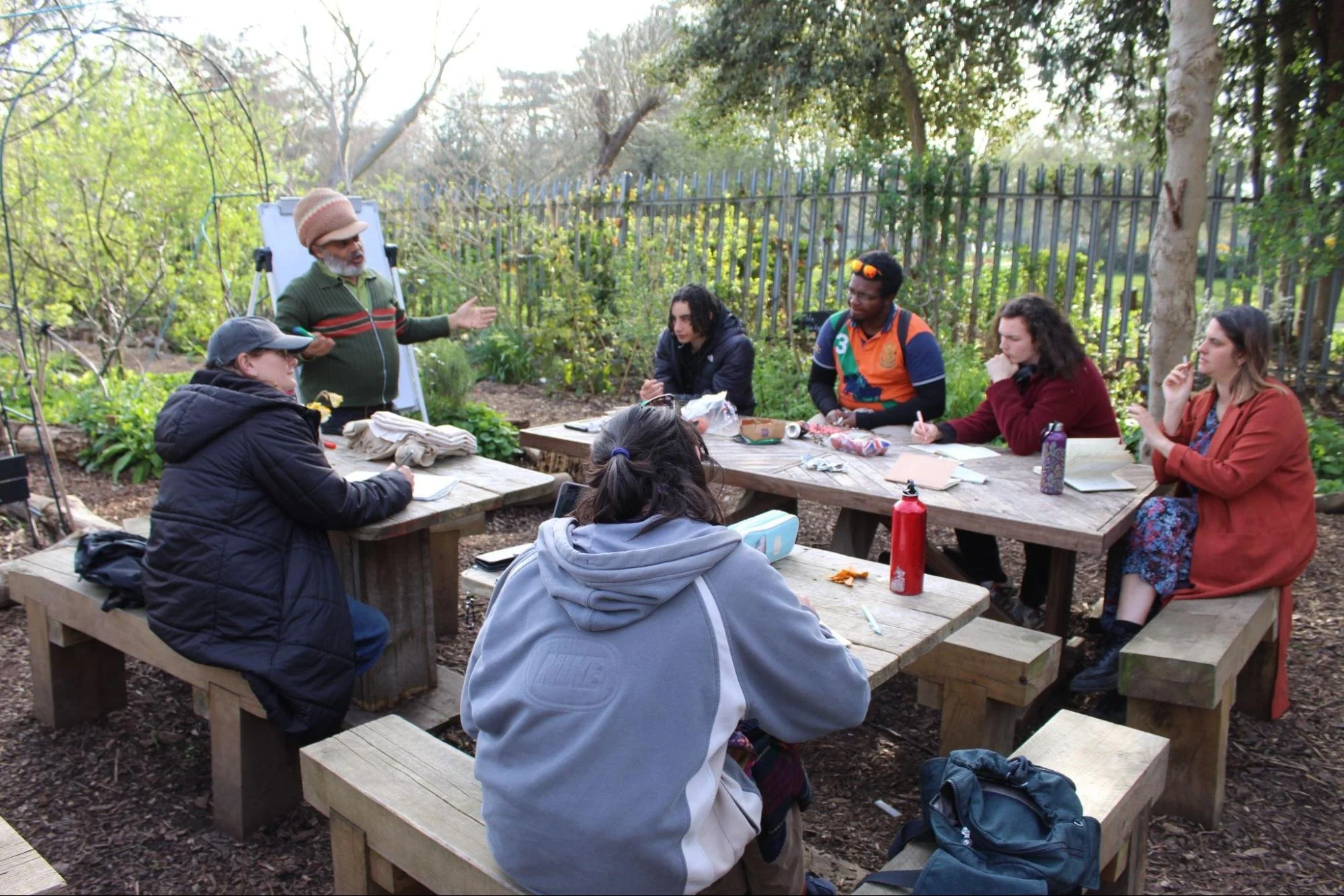
Learning about Forest Gardening with Rakesh
Both Garden Trainee cohorts got the opportunity to learn about permaculture principles with Rakesh. The first cohort completed a Permaculture Design Course during the Summer/Autumn period and had the opportunity to implement some of their designs in the new Story Garden. The second cohort visited Edible Landscapes in Finsbury Park and learn about the principles of Forest Gardening.
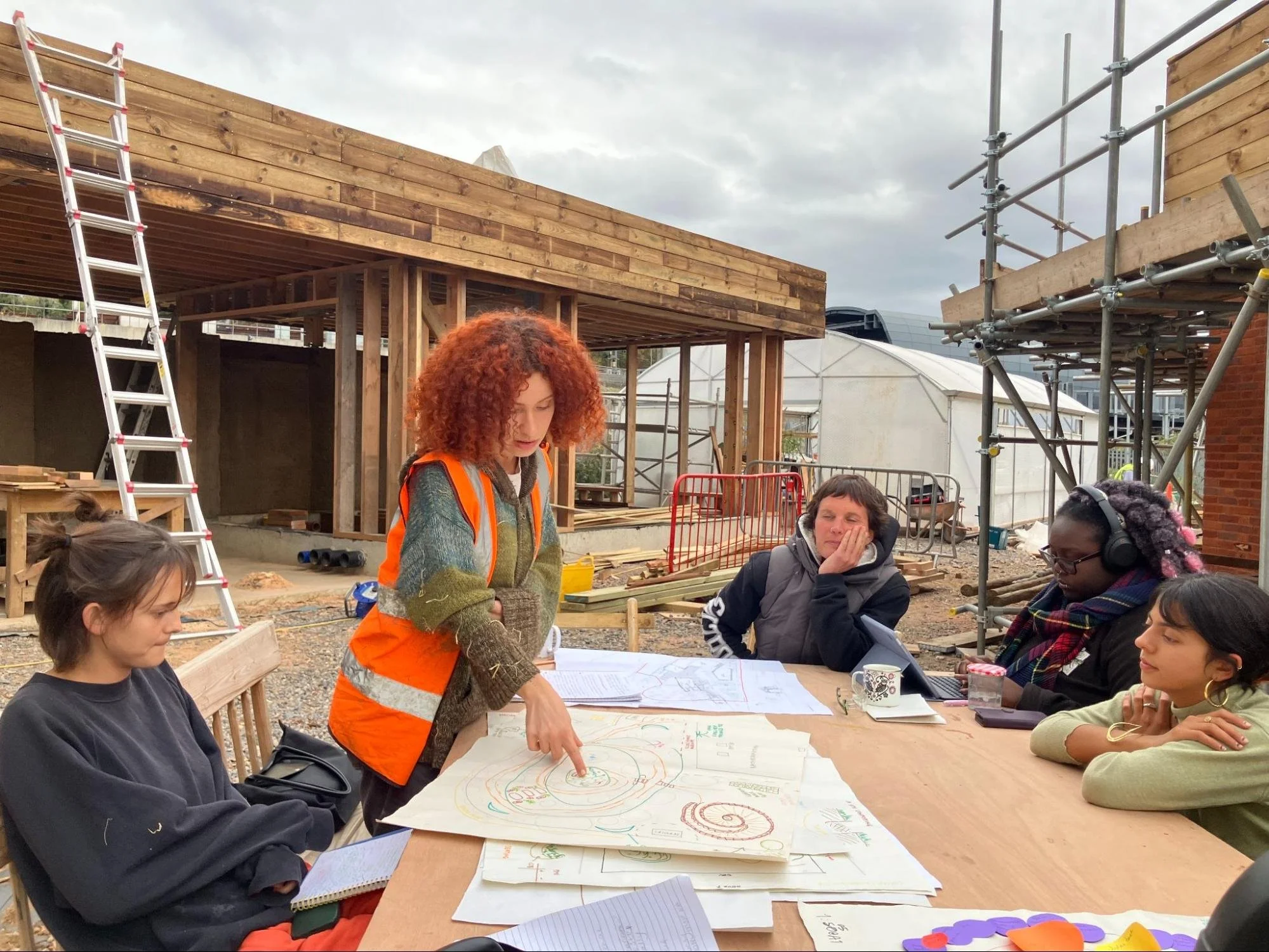
Garden trainee Famke showing her design to the team.
Co-design was a big part of the process of building the garden together. The garden trainees, with the help of the garden team, helped design the substrates on the biodiverse living roof, the planting in the woodland, forest garden and the pond. Sessions where we worked together to sketch out ideas and bring together independent research were central to this process.
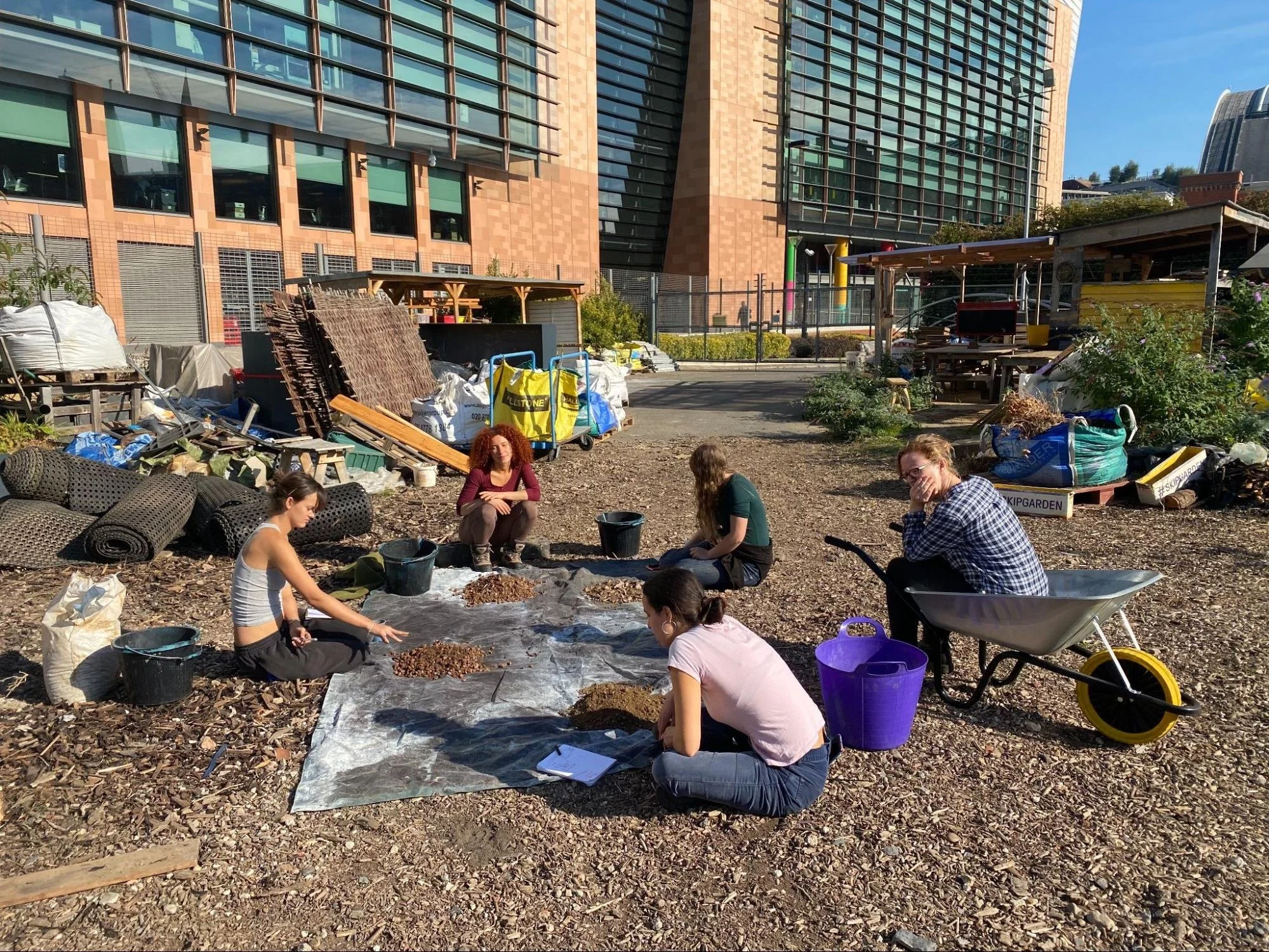
Design session making demo substrates for the brown roof with aggregate from the old Story Garden.
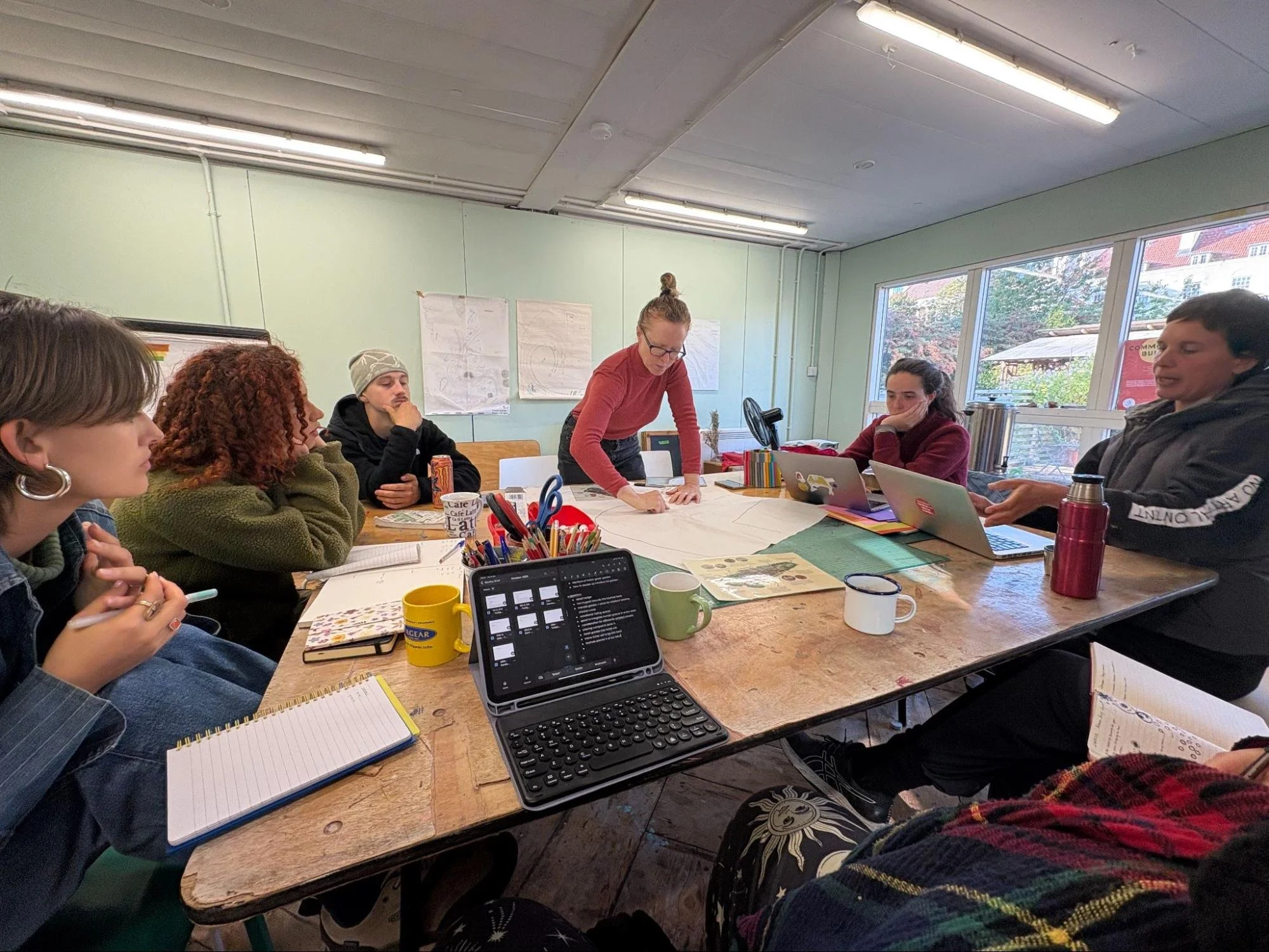
Design session looking at the Woodland and Forest Garden planting.
PART 2: INGREDIENTS / MATERIALS
The source for plants and materials varied: some were donated, some were bought in, many were moved from the Story Garden, others were found or ‘rescued’. The emphasis was on sourcing materials from as near as possible, which used as little energy as possible. As a result, many of the plants and materials were re-used. We even received a donation of carved stonework from the Museum of London.
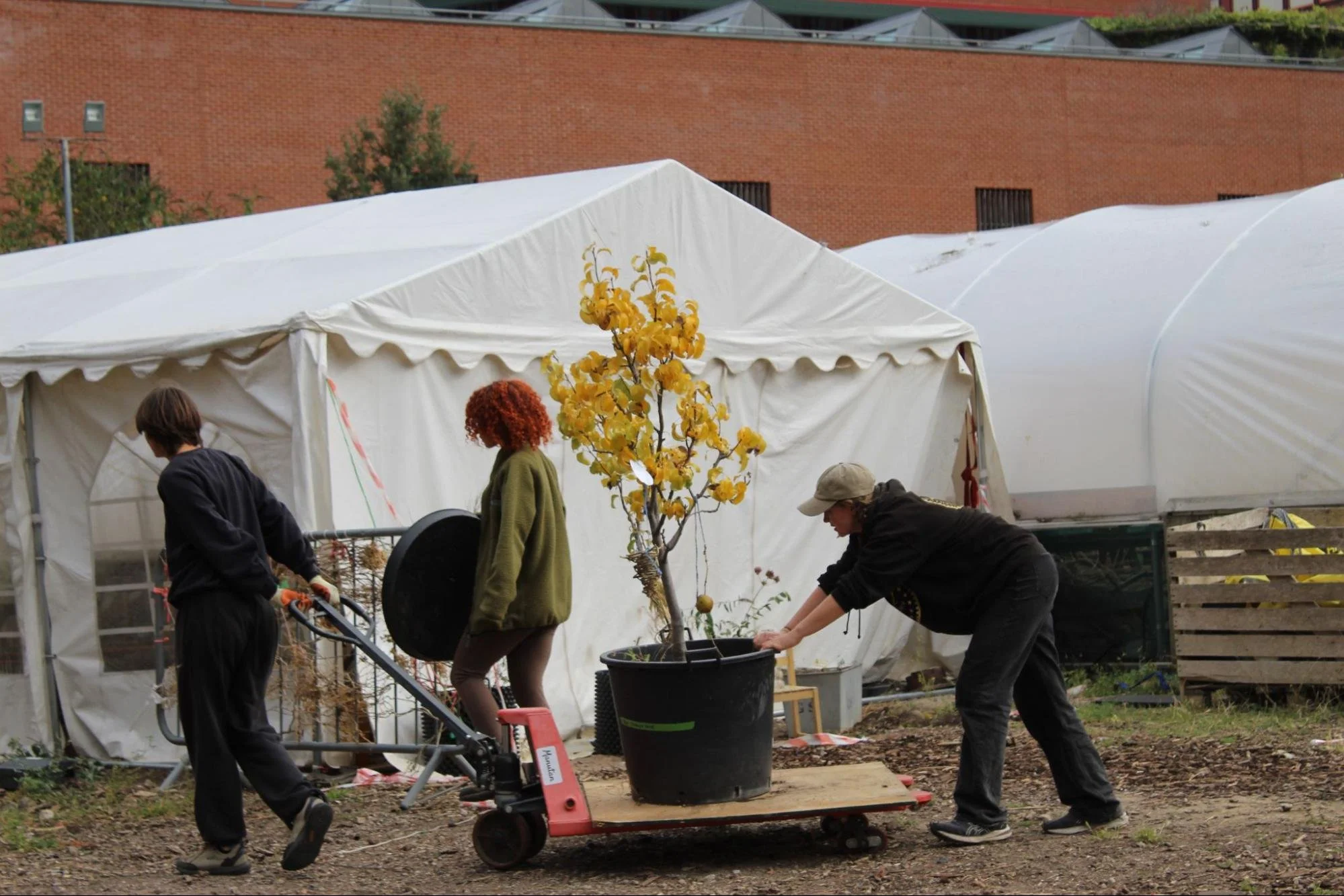
Moving a pear tree from the Story Garden
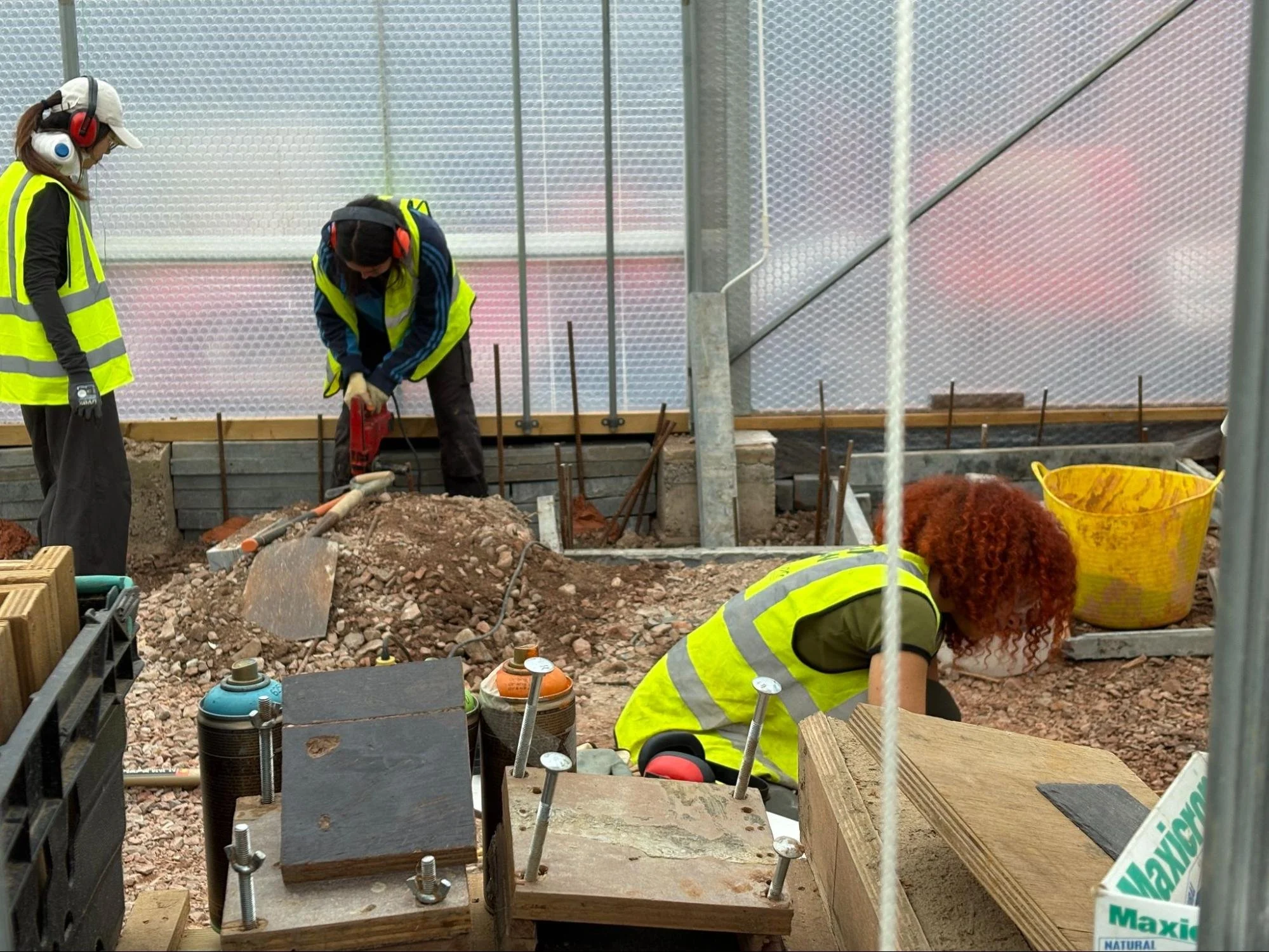
Using rescued granite paving slabs to retain the soil in the polytunnel planters
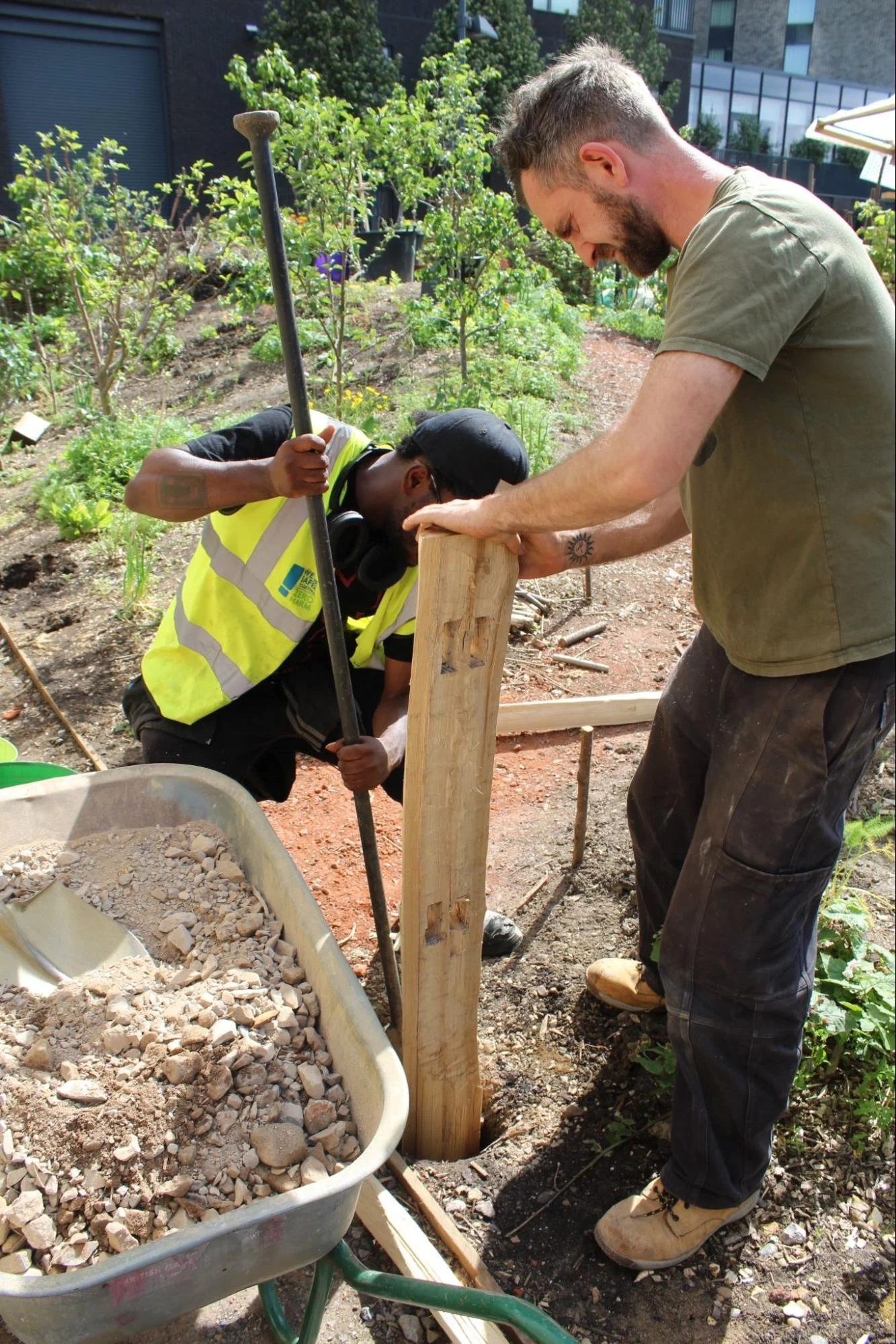
Using Sweet Chestnut wood grown from a sustainable woodland for cleft fence making.
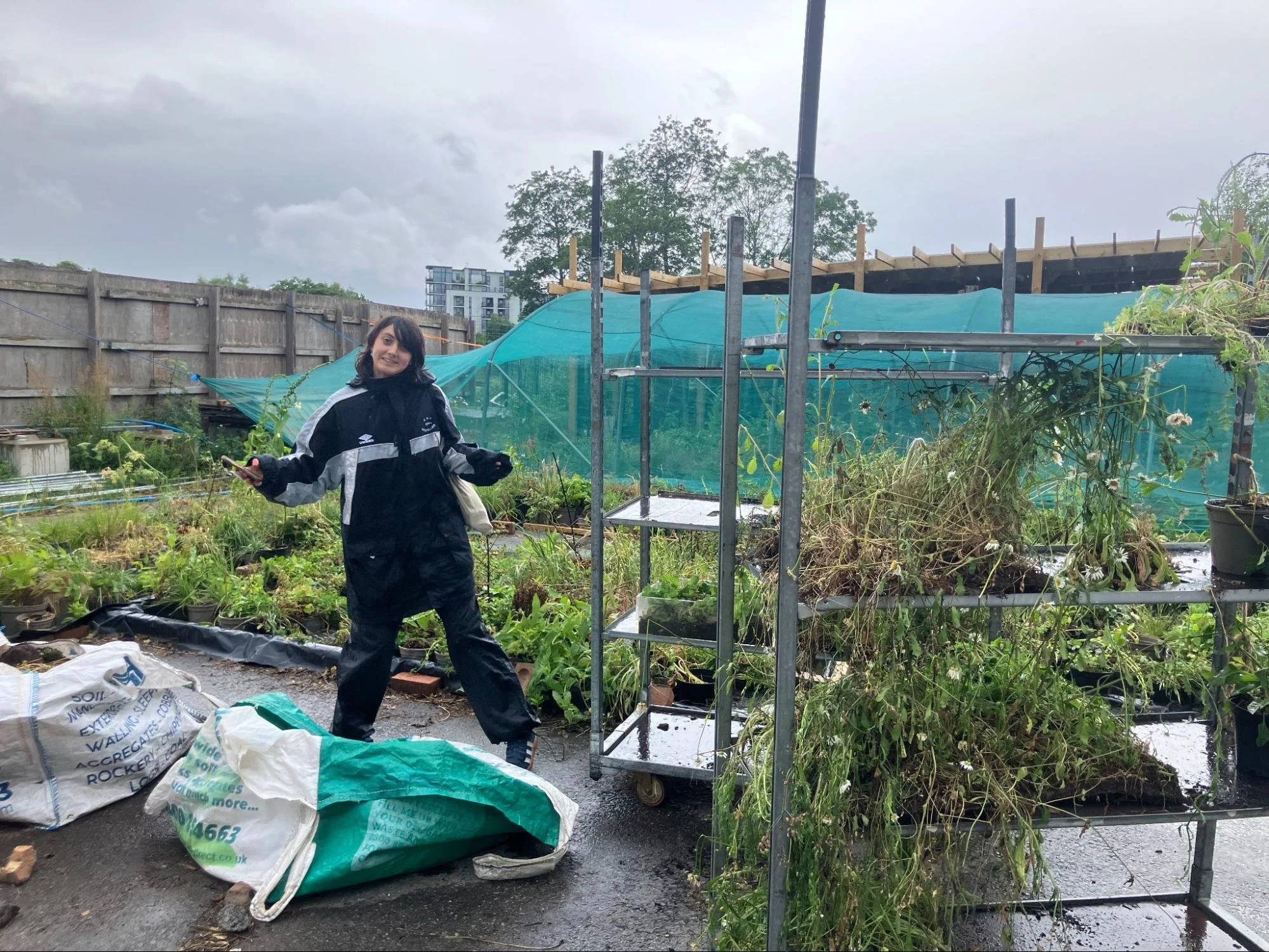
Collecting plants rescued from the Chelsea Flower Show at Cultivate Colindale
Part 3: STEPS / PROCESS
The timeline had to be flexible, working around the requirements of the buildings, the rain water collection tanks going in, tree planting season, availability of materials, weather, and staffing.
Here is a rough timeline of the steps taken by the garden team in 2025/2026:
September Move plants + materials on to site. Visit other gardens for inspiration.
October Build polytunnel planter and prepare ground in woodland for planting.
November Begin planting woodland.
December Install biodiverse living roof on office building.
January Complete woodland tree planting.
February Prepare soil for planting Forest Garden and complete tree planting in Forest Garden.
March Hard landscape Forest Garden and plant shrub and subshrub layer.
April Hard landscape compost garden and create Hugel mounds and log piles. Seed woodland.
May Hard landscape the rubble garden and make cleft fences in the Forest Garden.
June Build and plant rubble mounds, create pond and other habitats on site.
July Garden opens!
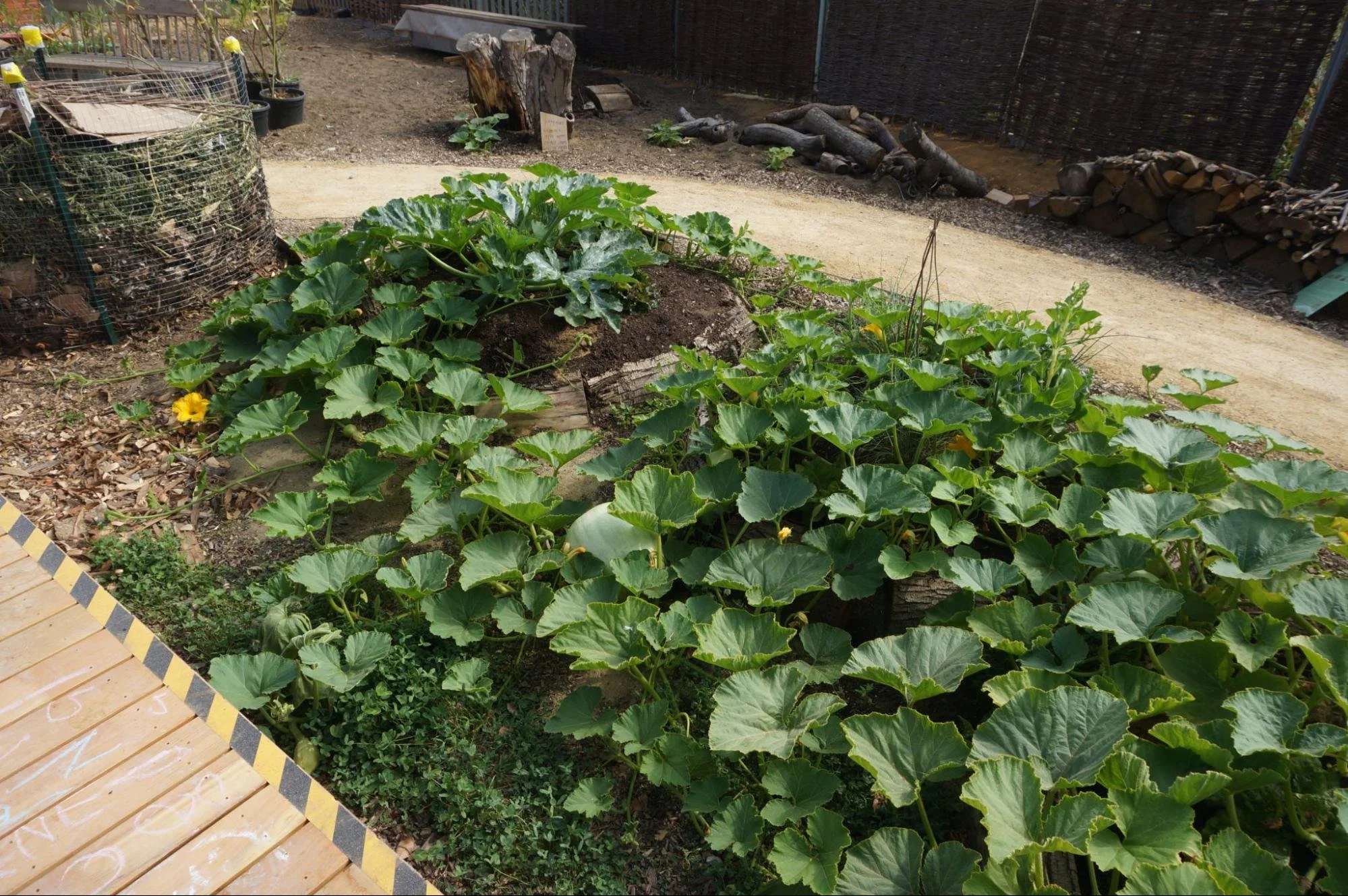
Image of the hugel mounds in the compost garden.
PART 4: THE MEAL / THE GARDEN
The compost garden welcomes visitors who enter the garden and puts COMPOST front and centre, rather than tucked away. Compost is a big part of the food growing that happens in the garden so we celebrate it by showing it off right at the front of the garden.
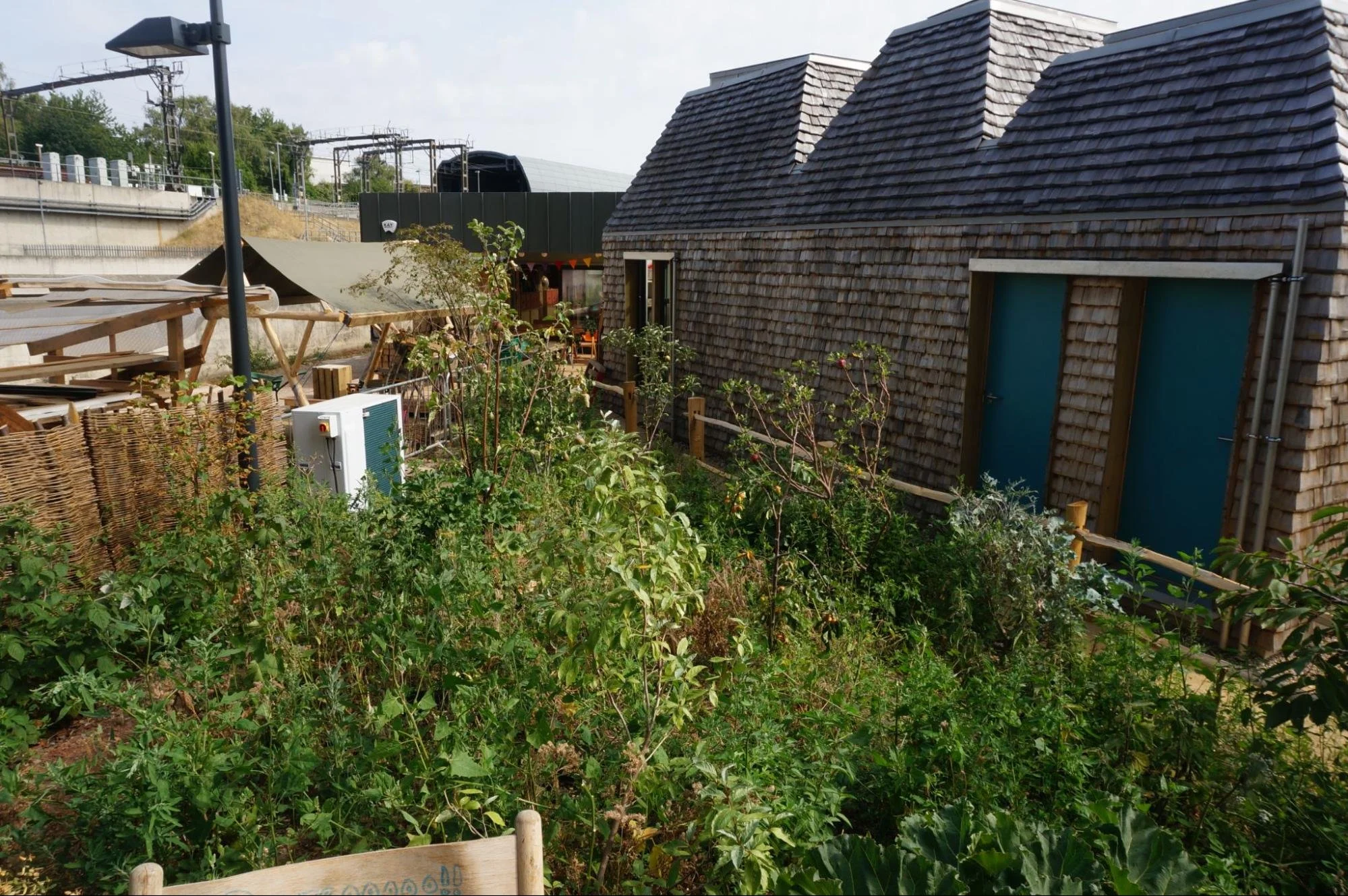
Image of the Forest Garden
The Forest Garden features a range of mostly all edible trees, shrubs and herbaceous perennials. The Forest Garden is framed by a native hedge, a woven willow fence and a hand-made sweet chestnut cleft fencing.
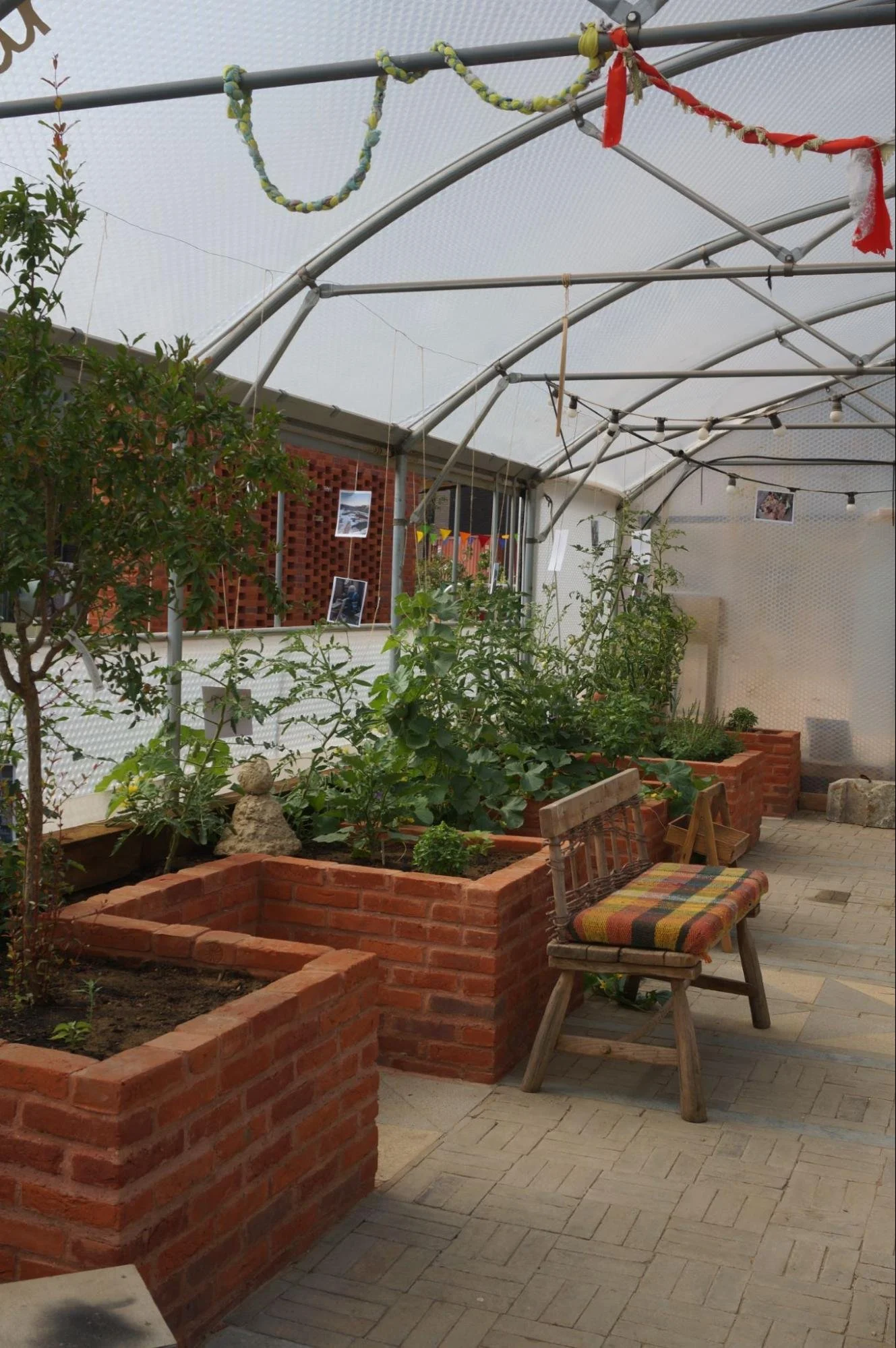
Image of the polytunnel in July 2026
The planters in the polytunnel began being built in September 2025 and the paving was finished in May 2026, with work happening on this space intermittently. All the bricks, the pavers were rescued and re-used, so the paving has a beautifully unique collaged mismatch of materials as a result. This summer, we are growing melons, tomatoes, aubergines, citrus fruits and a pomegranate tree. In future, we hope to grow ginger and kiwi fruit too.
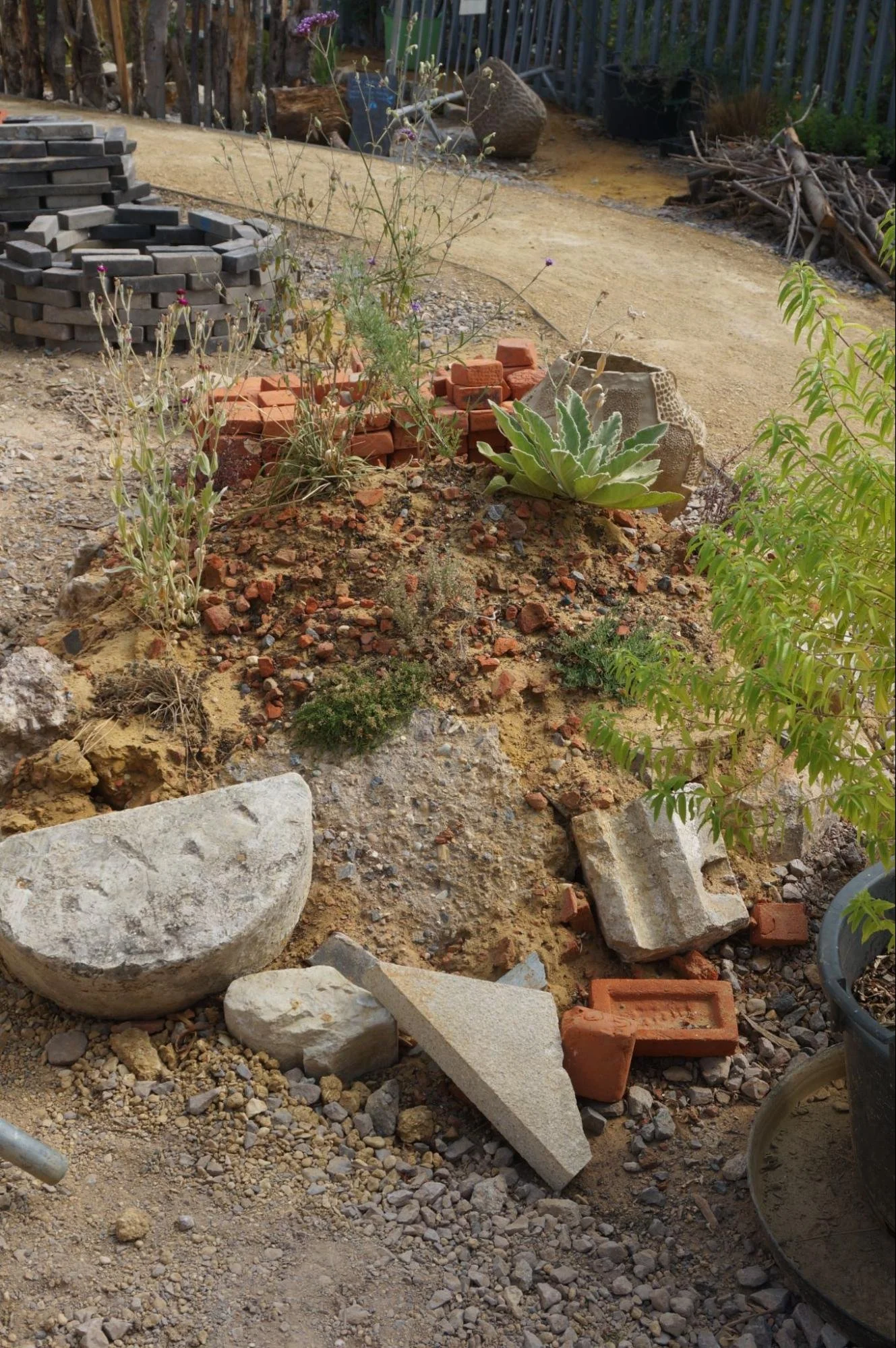
Image of one of the mounds in the rubble garden.
The Rubble Garden uses materials left over from our build - broken bricks, leftover sharp sand, crushed concrete, subsoil, green roof substrate, gravel and other aggregates to showcase the wildlife potential of brownfield sites and the diverse and resilient plant pallet of low-nutrient, free-draining substrates. Some of the ‘rubble’ in the garden is carved stonework dating back hundreds of years, donated to Global Generation by the Museum of London.
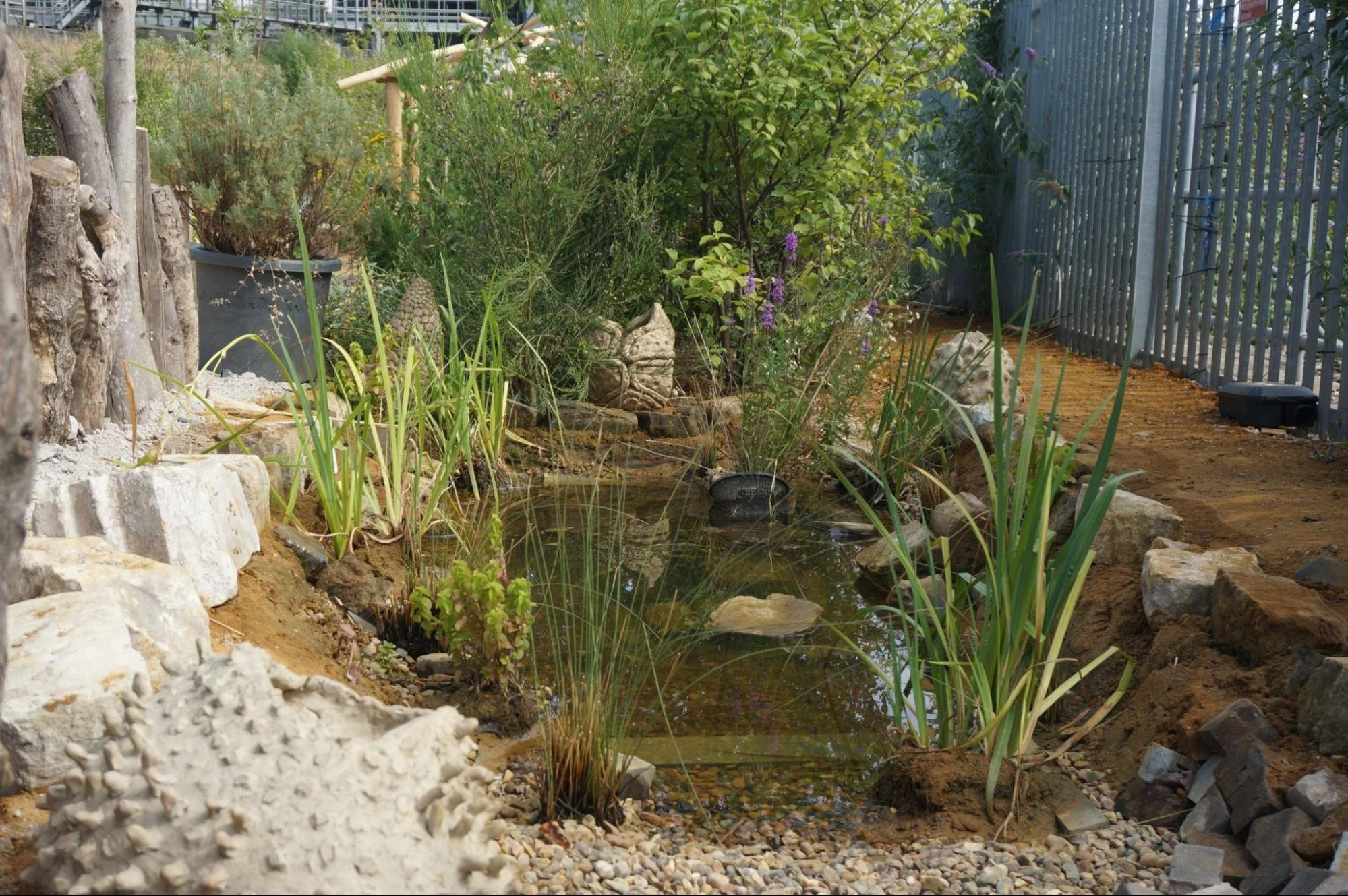
The Pond was co-designed, built, filled and planted by the second cohort of Garden Trainees. The pond features different shelves, edging and planting. The planting in the pond and at its margins is all native British plants. The depth of the pond is 750mm at its deepest point and the shelves gradually come up to ground level from there. Overflow from the pond spills out into the planting in the woodland.
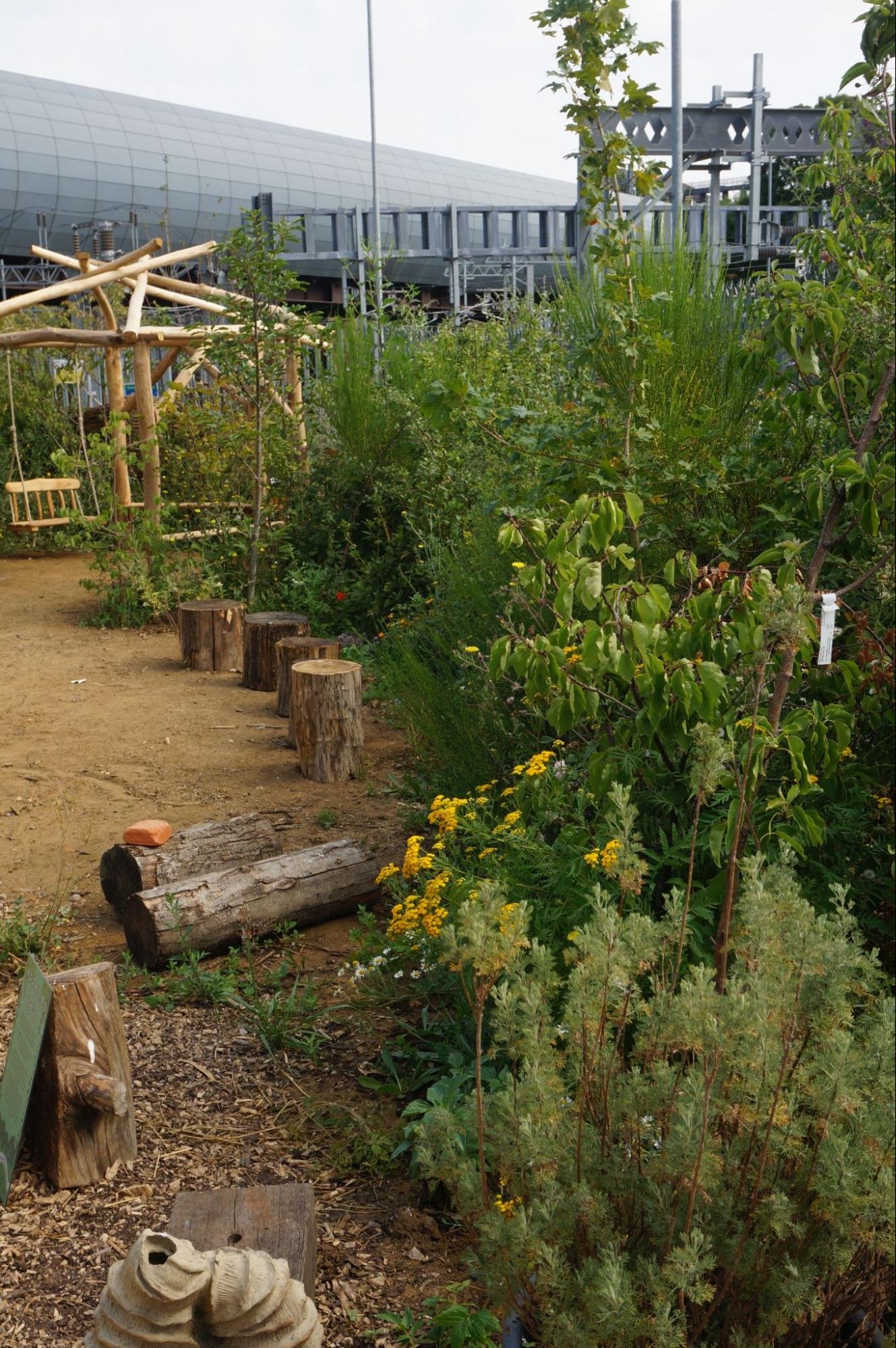
The Woodland planting in July 2026
The Woodland edge features mixed native / non-native planting and a meadow in the centre which will be re-seeded when wetter conditions can better support germination. The woodland also features the young people’s swing with climbers such as wild sweet pea, old man’s beard and honeysuckle to sit under and enjoy.
PART 5: EATING / VISITING
Lunch is served! The hard work is over, and the garden can be shared by all! Please come visit and see the collective effort that has gone into making this beautiful garden. We are open to all on Thursdays and Fridays from 10am to 5pm.
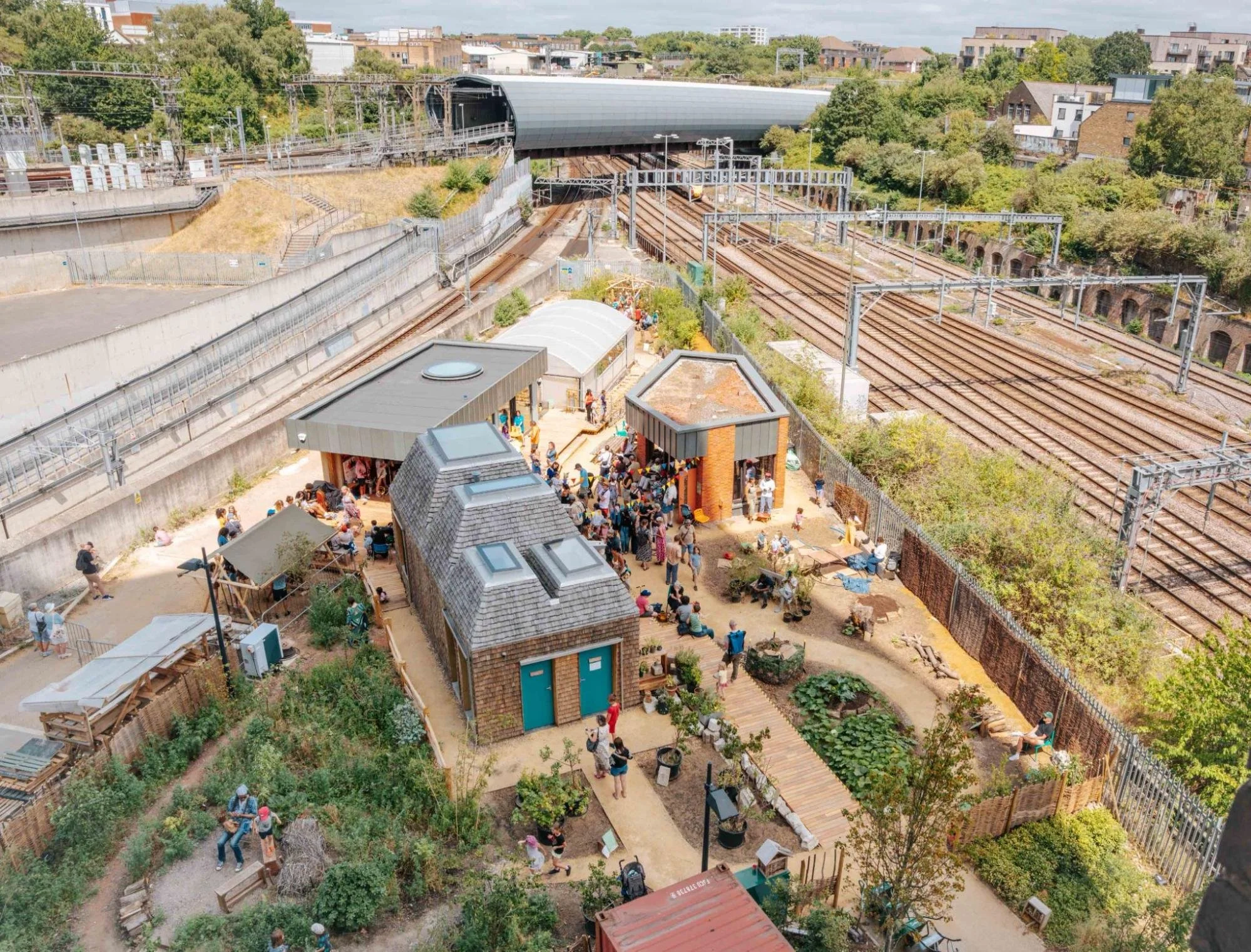
An aerial photo of the garden opening, photo credit Rocio Chacon.
Notes from the Garden
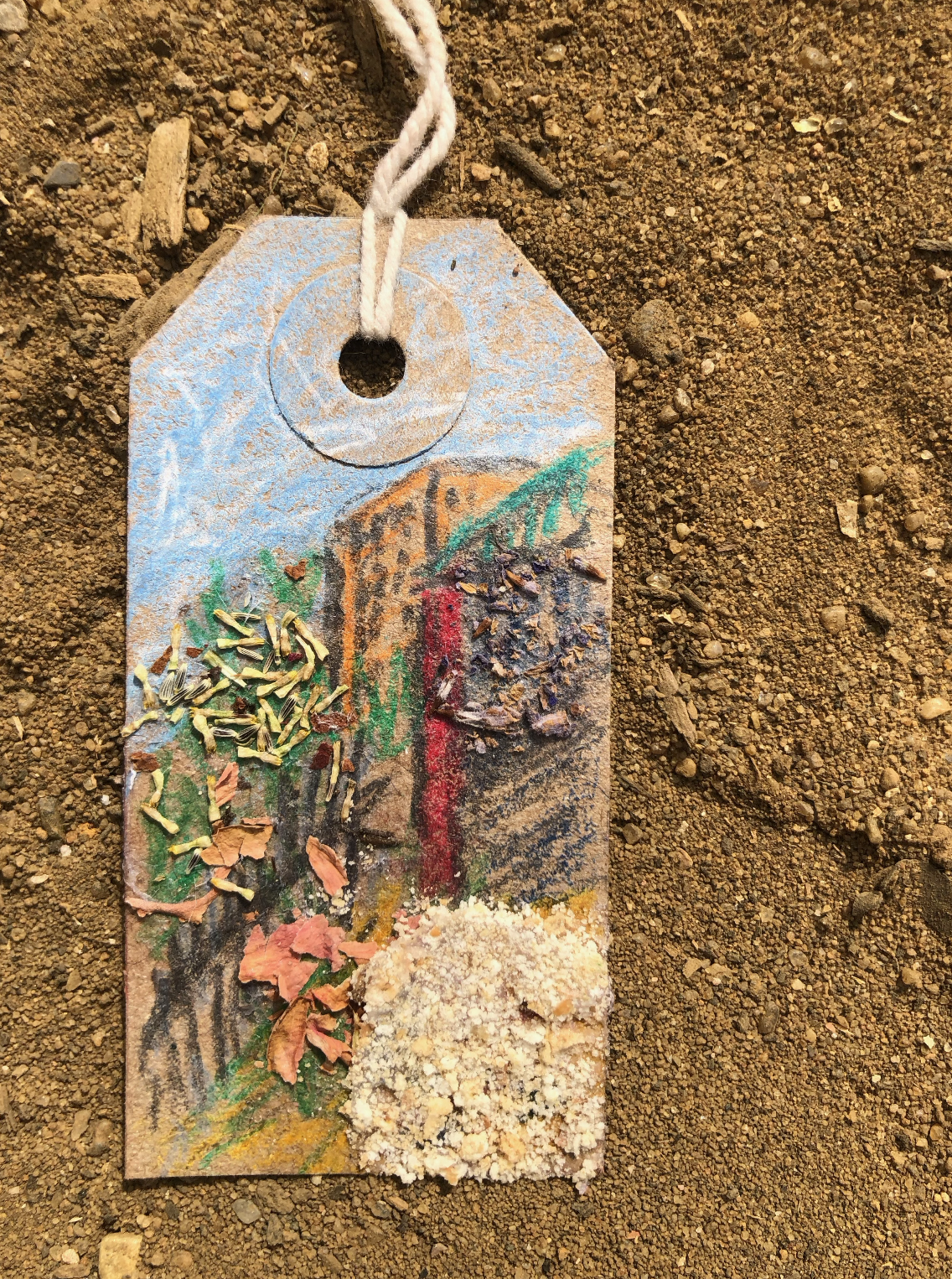
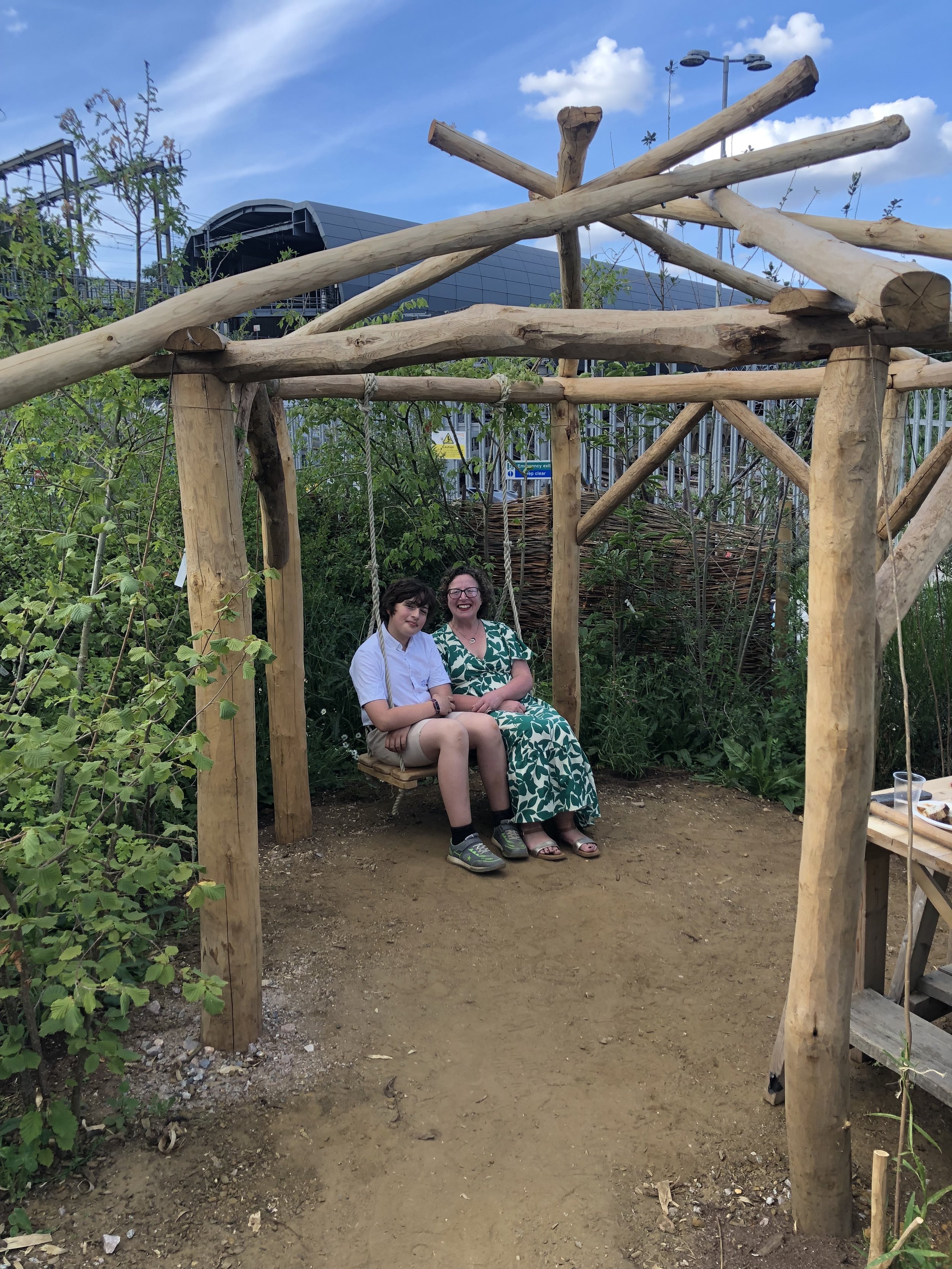
Carley Wootton, Story Garden Manager (maternity cover for Holly) writes about the move of the Story Garden in its new location (off York Way) and says that this process was a bit like making lunch: taking limited, rescued and unexpected ingredients and turning them into something new and worth sharing.