
Meet the garden trainees: Cohort Four
With our traineeship at the #TriangleSite we are able to teach multiple cohorts sustainable design and building, heritage crafts and landscaping skills. Cohort four ran from March - July 2026. Meet the members.
Theo
Tell us about yourself and why you wanted do this traineeship?
I wanted to do this traineeship as a way to develop new skills to assist me in the future with similar things like landscaping and gardening, be it a career in the same industry or to be able to have these skills that I can apply to my future garden and house. I also thought this would help me build my social skills a lot as this is something i have struggled with in the past before this i was a pretty unsocial person and kept to myself quite a lot because i felt nervous talking or interacting with people i wasnt familiar with at the time but i wanted to push myself so i wouldn’t have this problem in the future.
What was your connection to sustainable landscaping / gardening before this?
Before joining Global Generation as a trainee, I had spent quite a lot of time doing gardening, roofing and landscaping with my dad for his company The Green Firm where we did various things like cleaning up public parks, dug out a garden to put in a patio, a pond and various jobs up on roofs.
What have you learned & what values have you developed?
I have learned a lot about the foundations of how a garden space is developed over time through the efforts of a whole team, which is something I really enjoyed. I especially enjoyed bonding with and getting to know the other trainees as time went on.
Learning how to connect with others was an important part of this experience for me, as I had previously struggled with building relationships. It was especially helpful and much easier because everyone was so welcoming and friendly.
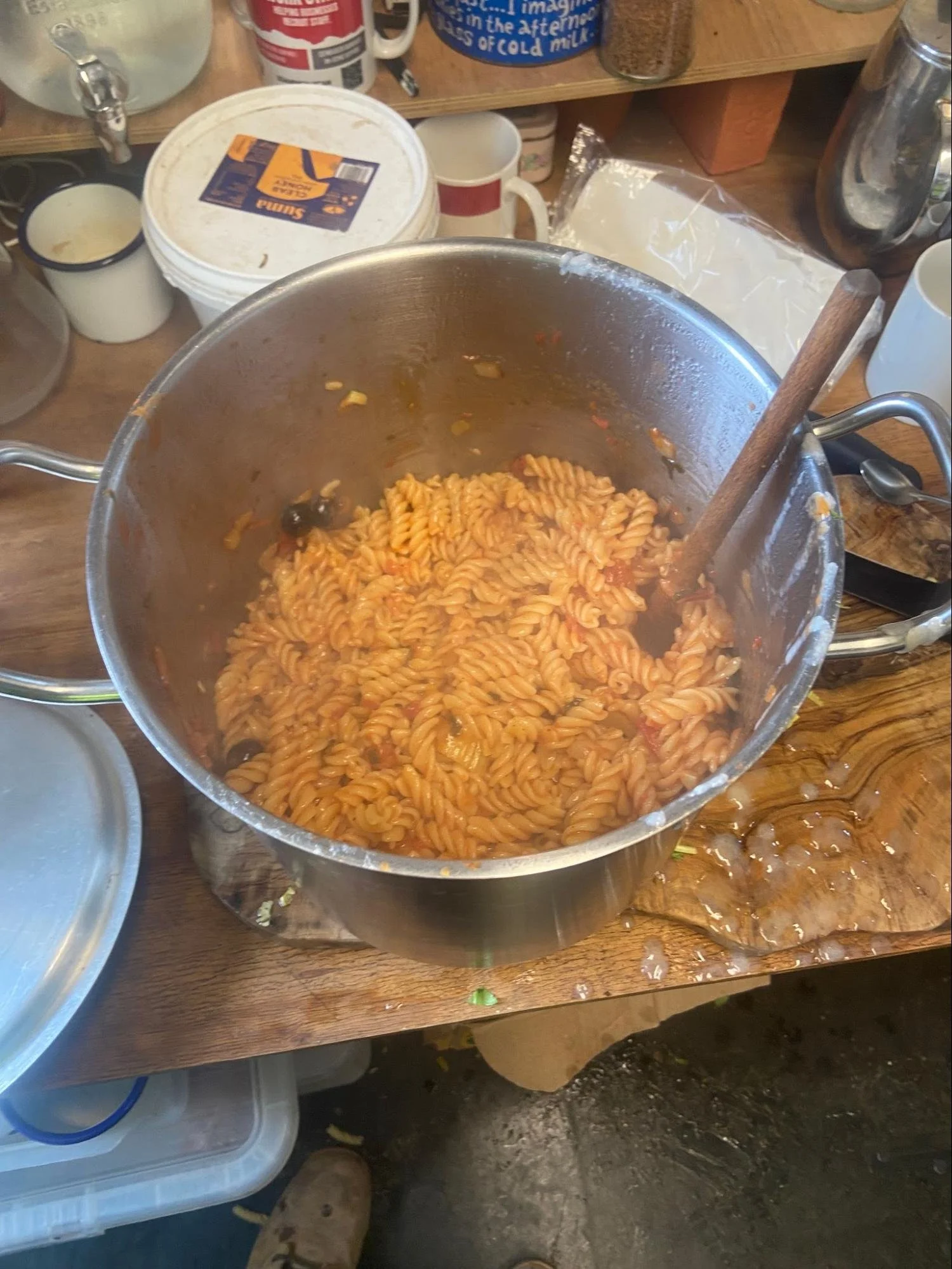
Other things I learned include how to build a forest garden, some basic tree identification skills, and how to get into the routine of waking up each day and arriving at work on time. I also learned how to cook for a large group of people, which was a completely new experience for me. Surprisingly, I found it really enjoyable, especially because I got to cook with some of the other trainees and see our different methods and opinions on preparing food.
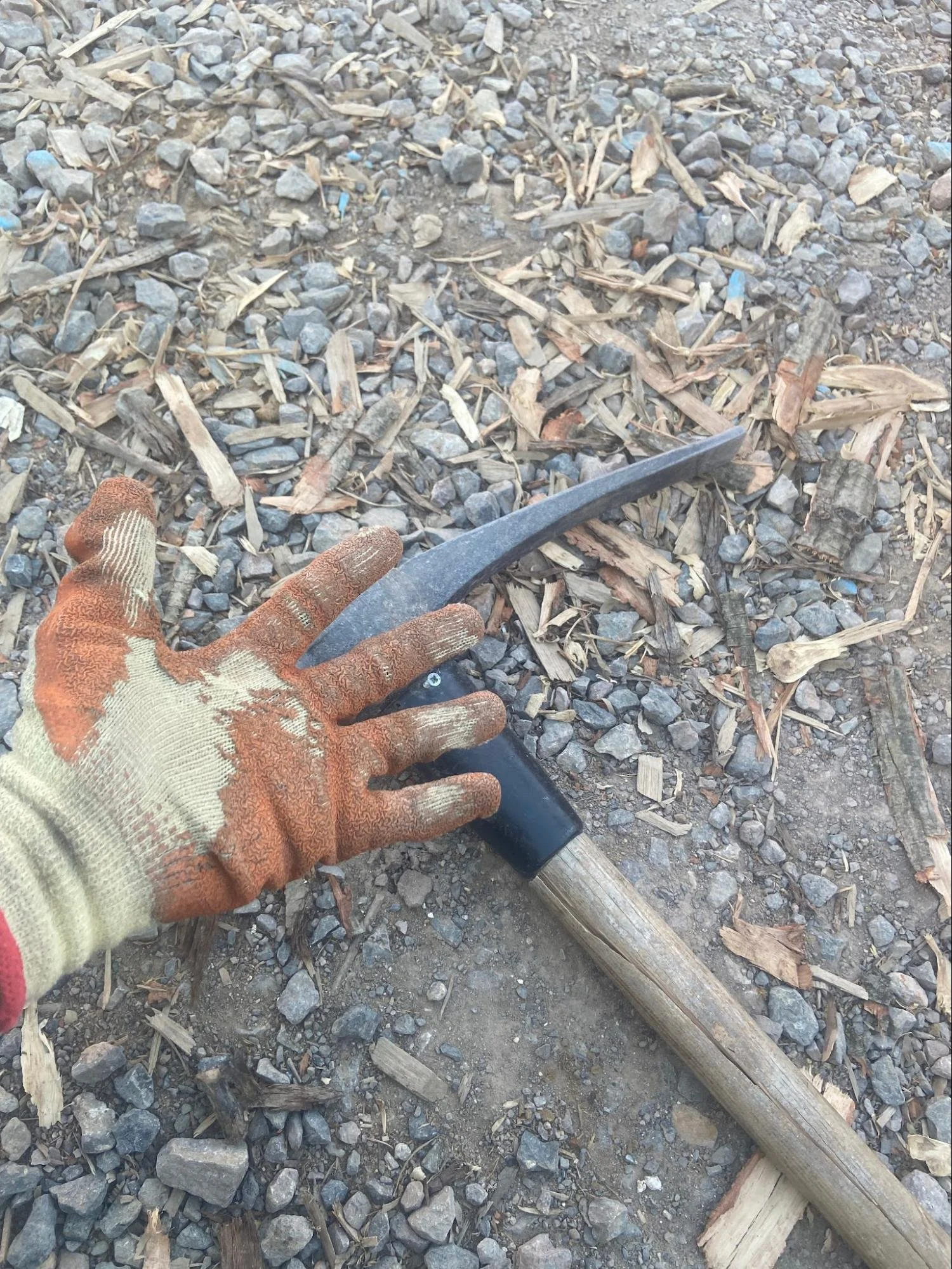
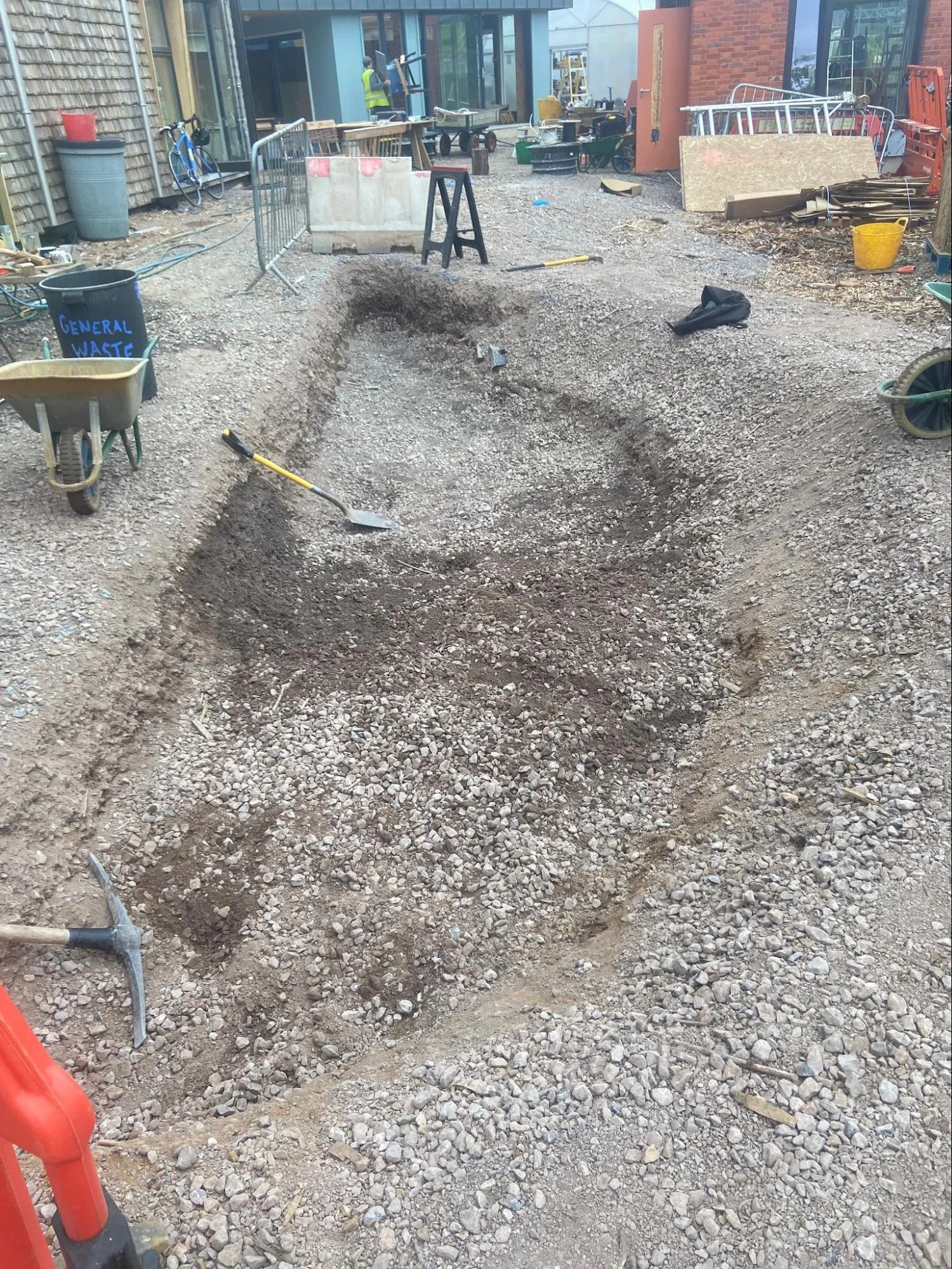
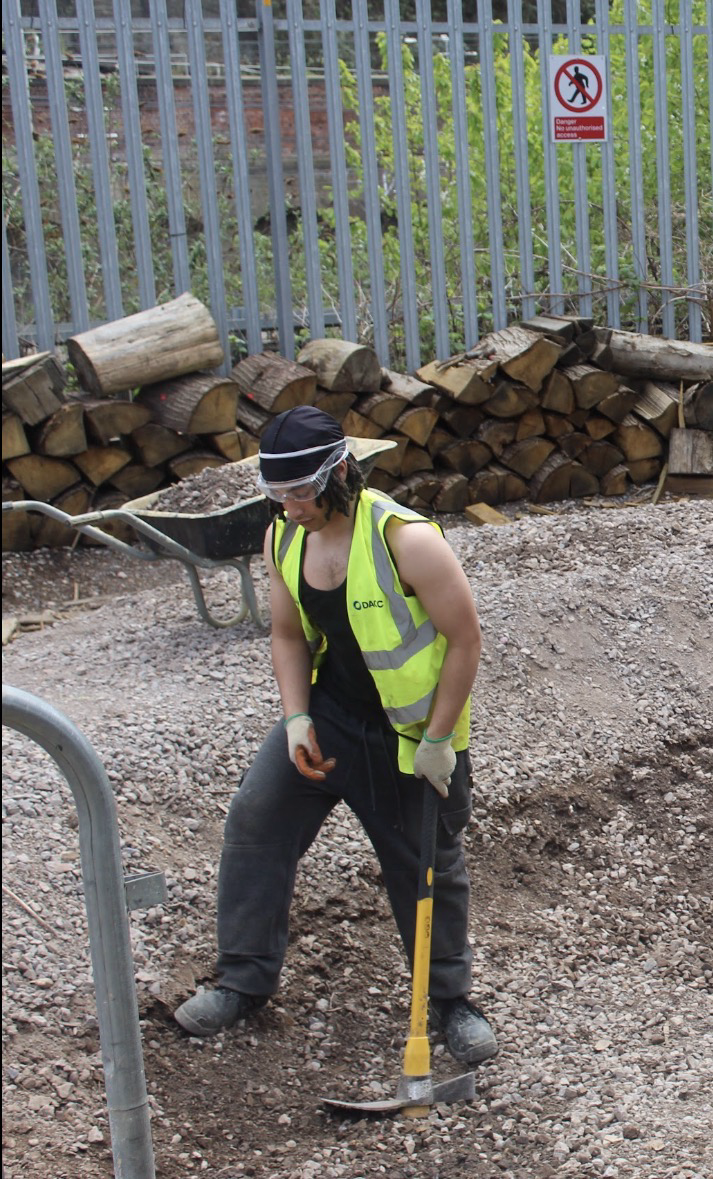
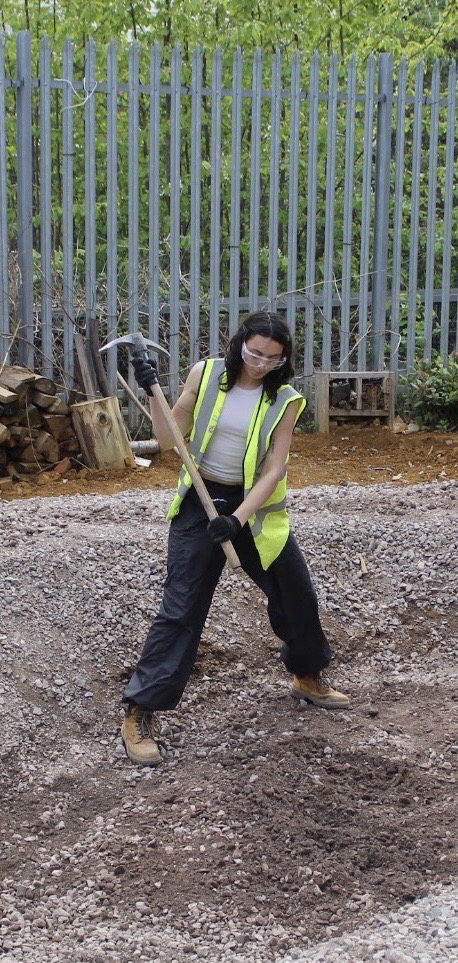
I also learned how to use a pickaxe efficiently while carrying out some hard landscaping work. This helped me understand the limits of my own stamina, and I actually found it very enjoyable because it felt almost like a form of exercise.
Jad
Tell us about yourself and why you wanted to do this traineeship?
I aim to become a professional landscaper and was seeking an entry-level position that offers opportunities to learn and develop my skills. While I initially planned to work in domestic gardens, I now feel that choosing to work at Global Generation was the better decision. The organisation’s strong emphasis on learning, combined with its community engagement programmes, provides valuable opportunities to build both my landscaping expertise and my interpersonal skills.
What have you learned & what values have you developed?
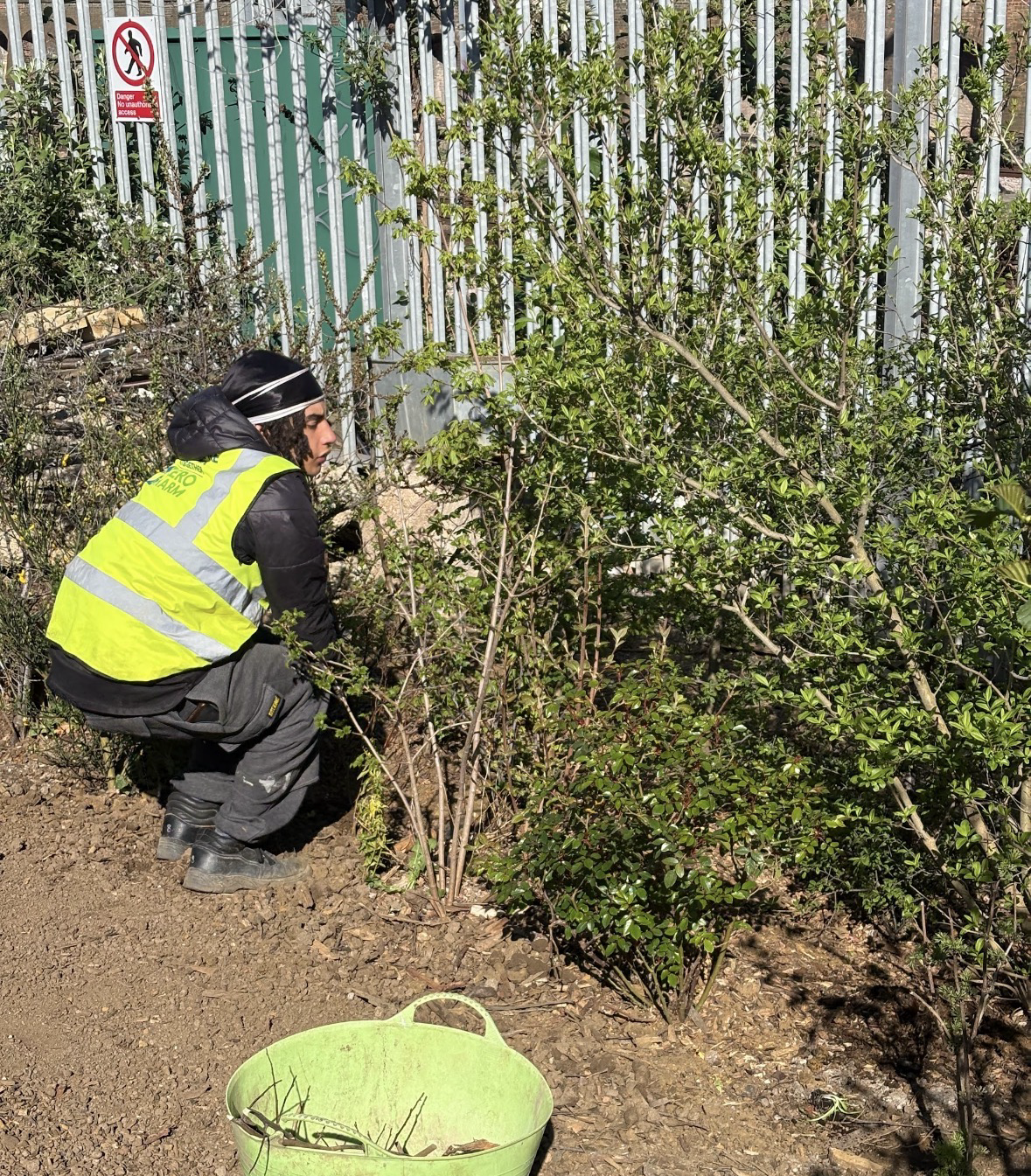
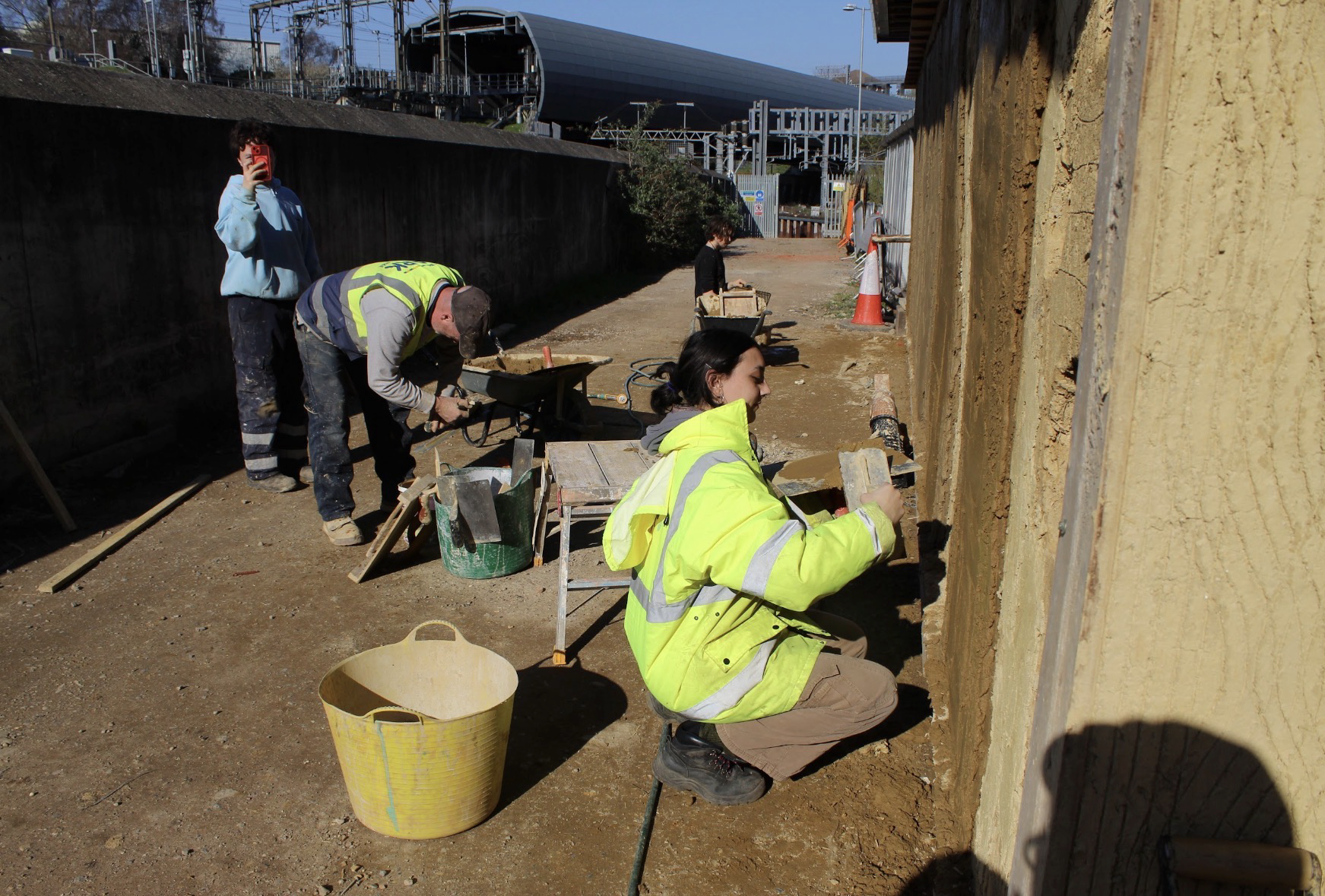
At Global Generation, I have found many opportunities to gain new and relevant knowledge. Notable areas of learning have included sustainable traditional building techniques, such as constructing cob walls; creating self-sufficient ecosystems using mineral fixers; understanding how seeds are selected and saved around the world; and plastering walls.
Furthermore, I have been given the valuable opportunity to take on a pseudo-supervisory role, helping to manage, teach, and lead a diverse range of individuals. This has included supporting people for whom English is a second language, young people on the autism spectrum, and volunteers of all ages who were eager to engage in practical, environmentally focused work.
To me, Global Generation is a group of passionate individuals united by a shared purpose: to create a place and culture that fosters learning and appreciation of the natural world. The site has a strong sense of unity and camaraderie, which is especially evident at lunchtime when a different member of the team cooks a meal for everyone each day.
In many workplaces, different departments or trades tend to operate separately and interact only when necessary. Global Generation feels different. Sharing meals together helps create a genuine sense of connection, where we are not simply co-workers but a team. This spirit of collaboration reflects and reinforces the purpose of the project: serving the community while nurturing a deeper relationship with the natural world.
brenn
Tell us about yourself and why you wanted to do this traineeship?
Prior to this traineeship, I actually had little to no experience with gardening, my mother and her mother before her are both avid gardeners, with many years of experience working on their allotments, however, I didn't develop my own personal connection to gardening until more recent years. I thought this traineeship would be a good opportunity to foster my own curiosity and bring me closer to my family in a way.
What was your connection to sustainable landscaping / gardening before this?
Although I hadn't done much gardening or landscaping before this traineeship, I've been able to use a lot of the transferable skills gained through both paid and voluntary reserve management work, many of the tools and techniques that I get to use now are similar to what I'm used to, though the extra practice using them has also been quite useful.
What have you learned & what values have you developed?
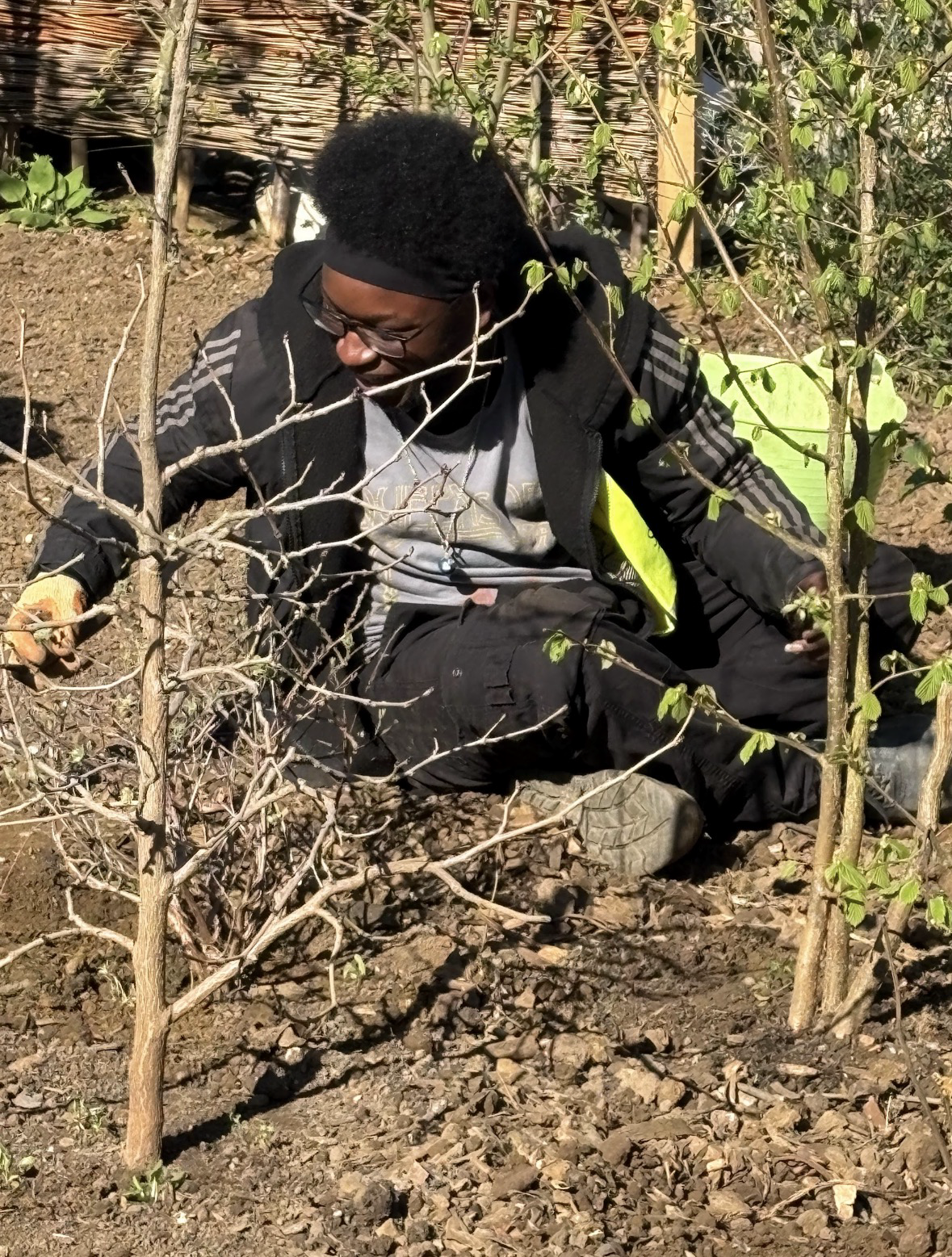
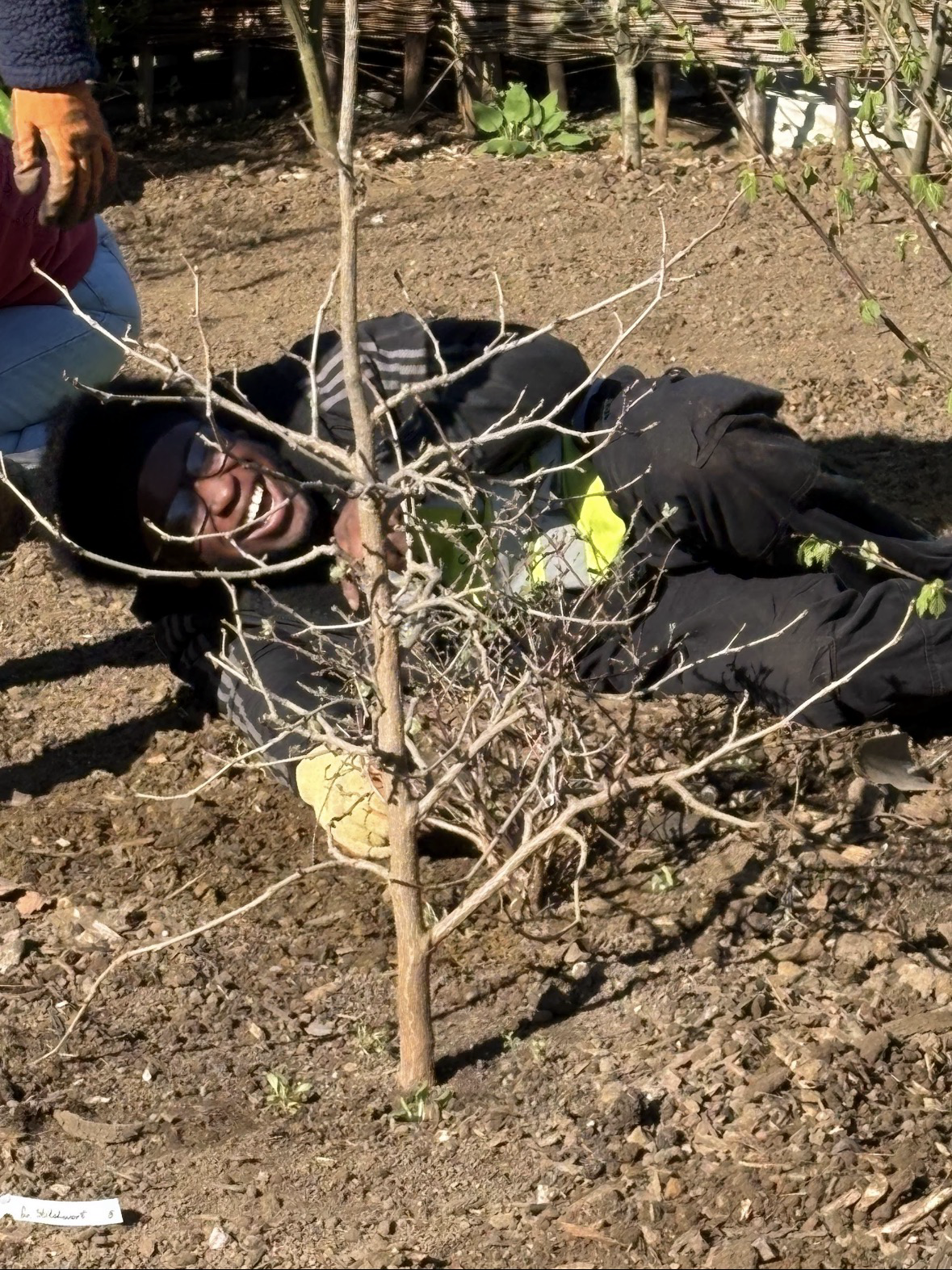
Helping to develop the Story Garden has taught me a lot about planning, ingenuity and community. Working on such a busy site with so many people working on different tasks everyday at first sounded quite daunting, though the fact that each person here has the common goal of making this garden the best place it can be, quickly became something I still remain in awe of.
lulu
Curiosity and helping to leave behind the legacy of the first permanent site
I wanted to become a trainee so that I could be more involved in the physical construction of the new site. Before joining, I had never visited the Triangle site, as our paths had simply never crossed. Most of my time with Global Generation had been spent at the old Story Garden (on Ossulston Street), where I worked on a variety of projects with the Fellows and undertook freelance work.
I also wanted to become more familiar with the core team at the Triangle site. Some of them I had met briefly or spoken with on occasion, while others I had never met at all, despite the important role they played in what I see as a groundbreaking milestone in Global Generation’s journey. The Triangle represents the organisation’s first permanent garden site and a lasting legacy for both the community and future generations. Being community-built makes it an especially significant achievement, and I wanted the opportunity to contribute to it directly.
Keeping nature in my pocket
Another reason stems from my love of learning and absorbing knowledge. I've never been much of a green thumb, or a builder, or a designer, or a specialist in any field for that matter, as my practice as an artist touches base upon many avenues/mediums, but i have always kept nature in my back pocket to pull out and use for inspiration for my art. All because the younger me took that chance and stumbled into the world of being a Generator (part of Global Generations youth programme) my morals have ever since been aligned with focussing on sustainable practices. And i am excited to be creating a short montage film of the traineeship, and showing it in the showcase in July.
Obtaining knowledge is like obtaining treasure, its power, its ignition. How can I adapt and be confident in using these skills to become self reliant and create a more eco focused future for myself and the community? How can i weave in these skills within my creative practice as an artist? How can I challenge myself, and store and remember the species and properties of the shrubs I plant, or the cultivation techniques that go into helping them to thrive?
The Garden traineeship as a form of activism?
Learning about sustainable eco systems is one thing, but building them is a form of activism - resistance against the extractive systems that profit off of our mass consumption and put profit in front of humanity and seeing nature as sacred. Spaces like the Triangle site are regenerative, are revolutionary, and remind London of the glimmer of hope that there is when people who wish for a better, greener world come together and turn a disused land site, into a biodiverse community space full of life and culture, starting with a borough.
Our environment is a priority, and nurturing it, learning about it, connecting with it, giving back to the sacred source that provides us with nutrients, life and serenity, should always be our priority and should in fact be normal practices imbedded within our lives - especially when our species is responsible for actively poisoning it.
What we've been up to
I have learnt a lot more trust in myself when it comes to the different stages that goes into mainly hard landscaping construction, and plant cultivation. So far we have been shaping an area on site to make room for more biodiversity and agriculture focussing on areas like the forest garden mound, compost area and woodland area.
Some of the things I have learned include:
Landscape design and hard landscaping principles.
Shovelling, raking, and shaping areas to improve accessibility, including pathways.
How to plaster using the fresco technique.
Installing community-built fencing.
Levelling ground and surfaces accurately.
Using a chisel drill safely and effectively.
Creating different concrete mix consistencies and testing their suitability for specific applications.
Constructing post supports that keep timber out of direct contact with soil and concrete, including drilling holes and installing fixings to improve structural stability.
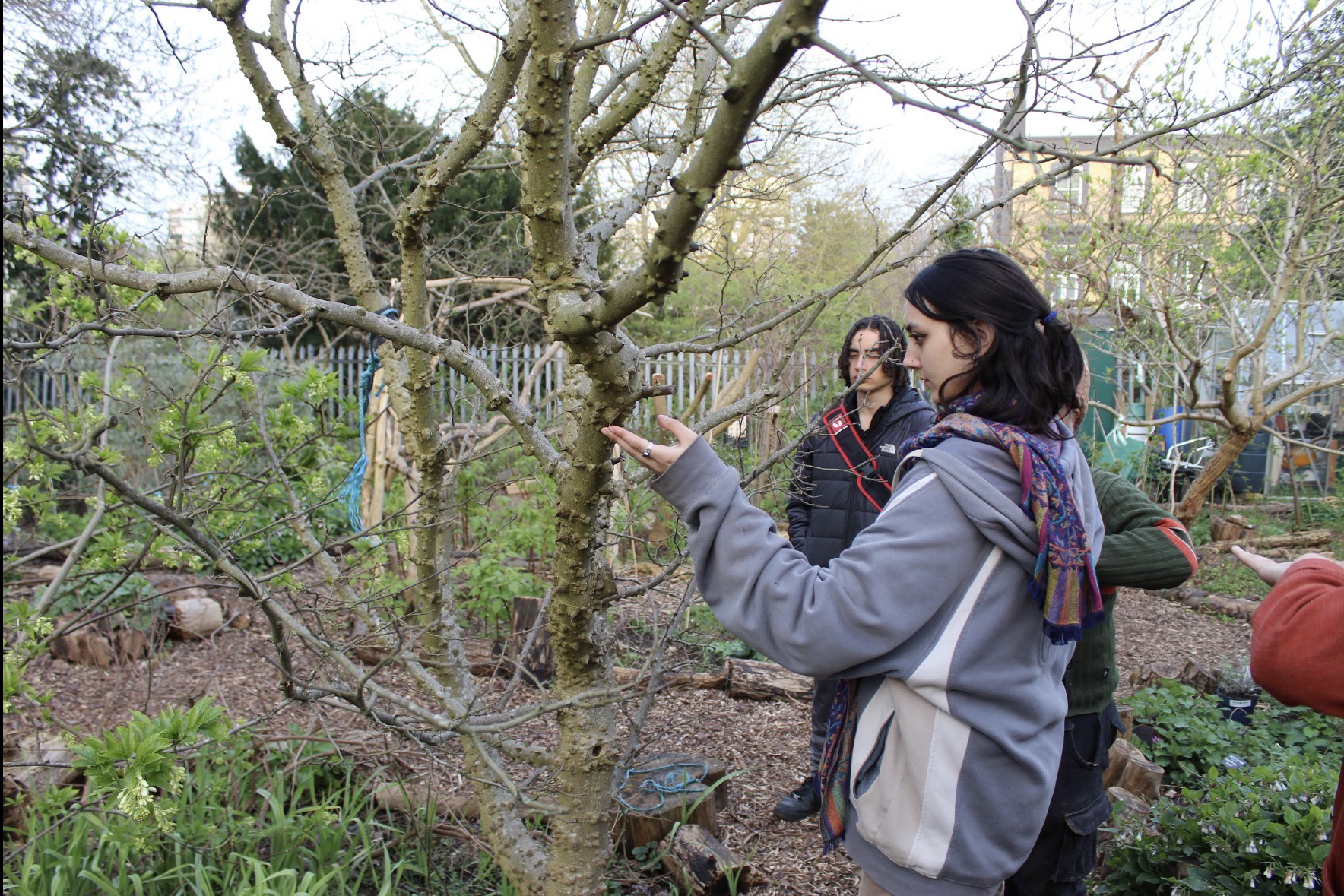
How to create and maintain a forest garden.
The importance of a variable edge in planting design, using dispersed plants rather than a uniform line.
The role of herbaceous plants in supporting tree health and creating nutrient-rich soil.
The importance of nearby water sources and clay soils in encouraging pollinators.
Seed preservation methods, including cryogenic storage of seed embryos.
The difference between recalcitrant seeds, which cannot be frozen, and orthodox seeds, which can.
Growing mycelium and mushrooms using different substrates.
Mushroom propagation and cloning techniques.
The distinction between fungi and bacteria.
Sowing and establishing a wildflower meadow.
The issue of seed smuggling and its impact on biodiversity.
Learning about the ginkgo tree and its significance.
Breaking up and moving MOT Type 1 aggregate.
Transporting heavy materials safely and efficiently.
Using a pickaxe correctly.
Using a sledgehammer correctly.
Crushing brick and slate for path construction.
Developing a more practical mindset and learning not to let perfectionism slow progress.
Assisting with the preparation of meals for more than 16 people.
Soil oxidation and its effects on soil health.
Preparing soil for seed sowing and establishment.
Understanding how certain grasses can become invasive in specific environments.
I have an attachment for invasive plants
Notes from the Garden
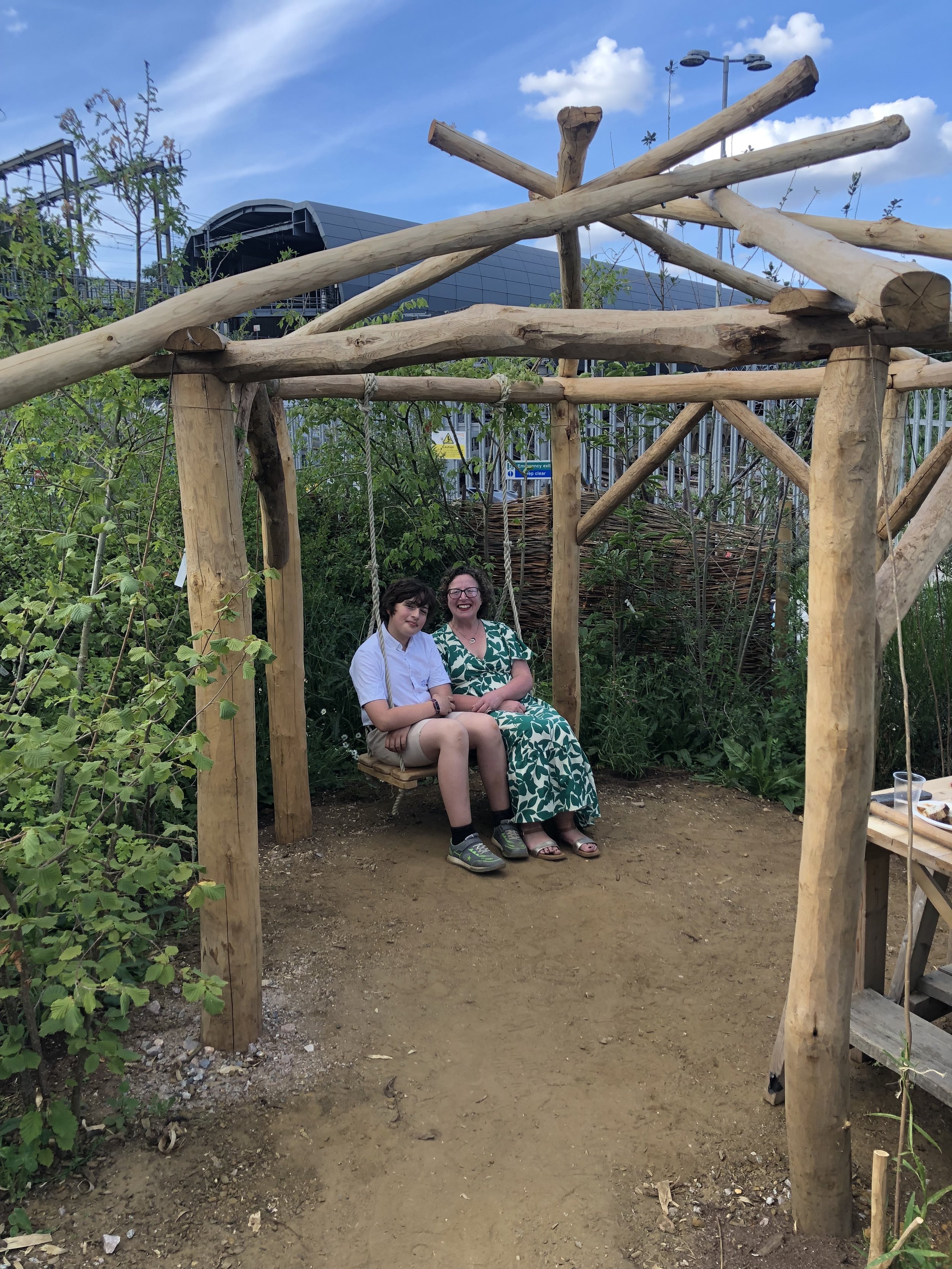

Carley Wootton, Story Garden Manager (maternity cover for Holly) writes about the move of the Story Garden in its new location (off York Way) and says that this process was a bit like making lunch: taking limited, rescued and unexpected ingredients and turning them into something new and worth sharing.