
The Big Story Garden Move: Circularity in practice
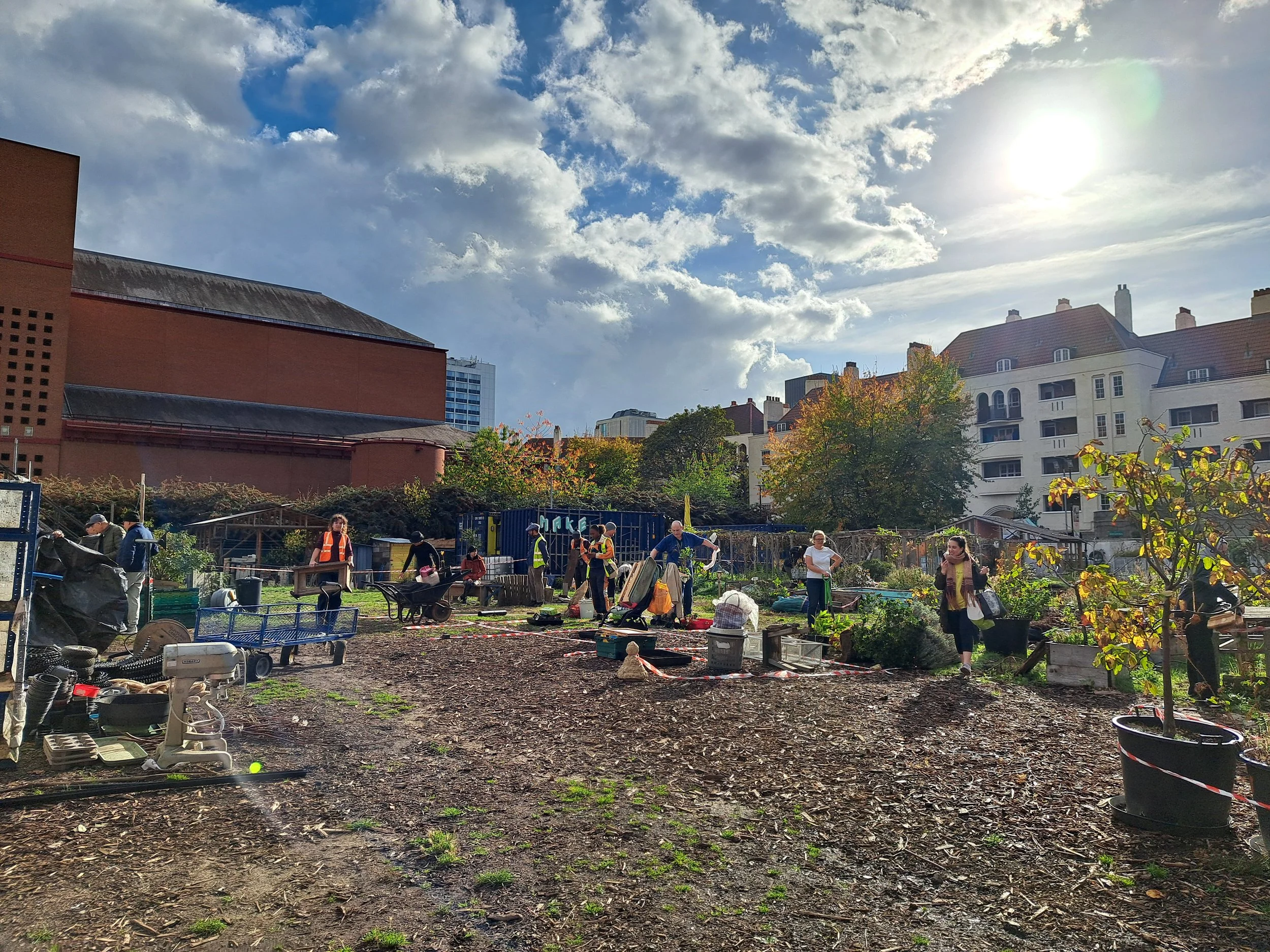
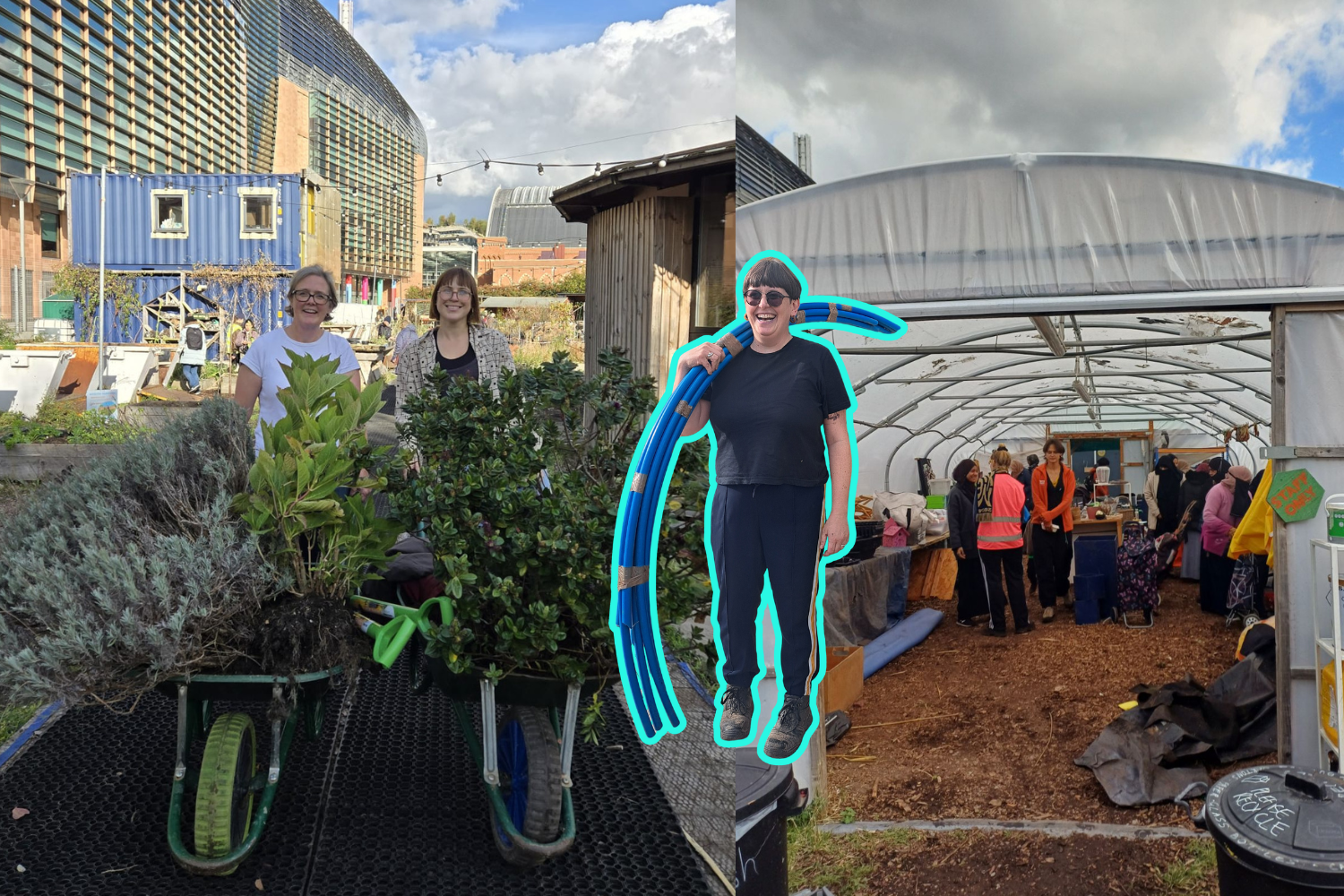
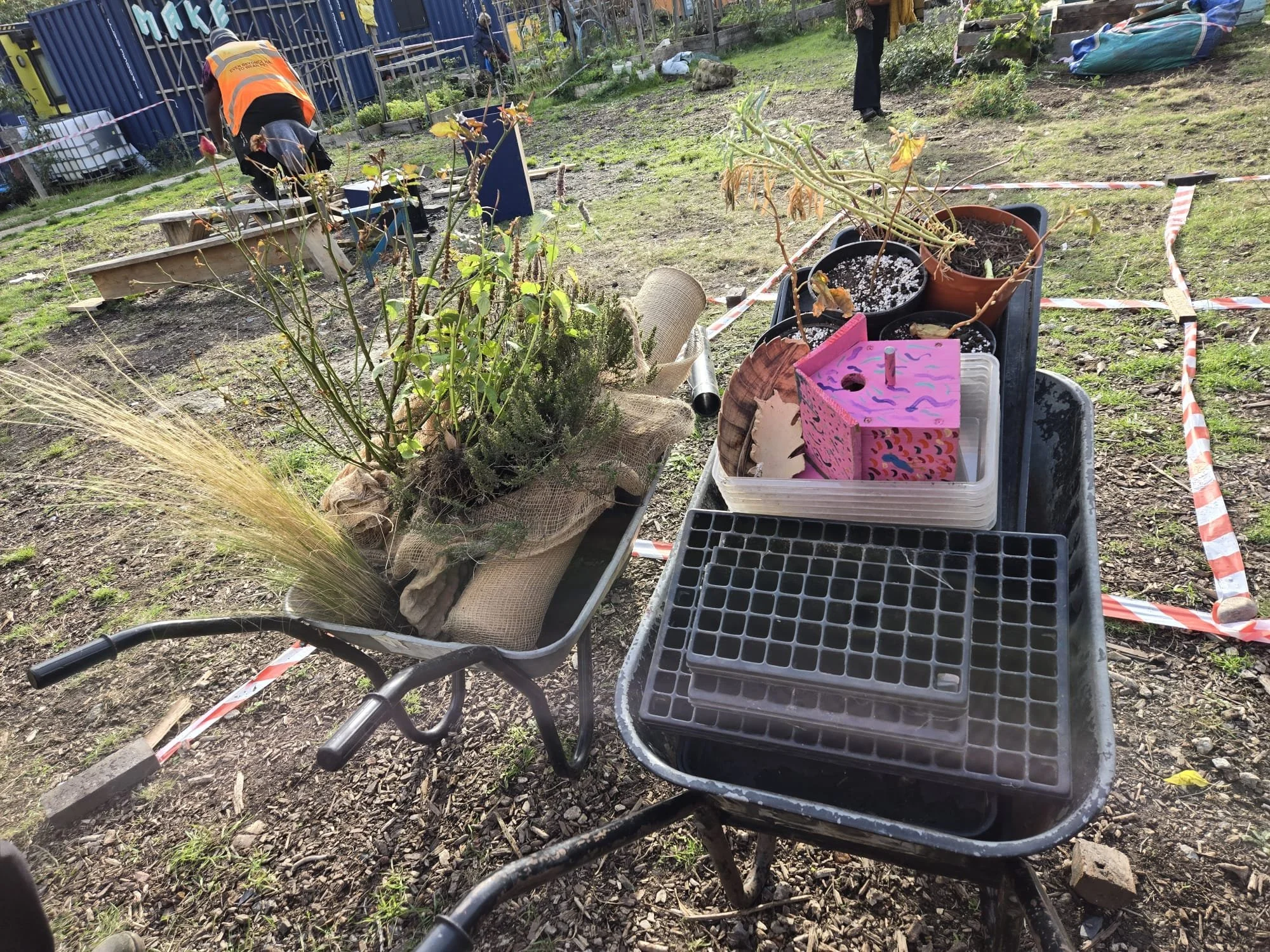
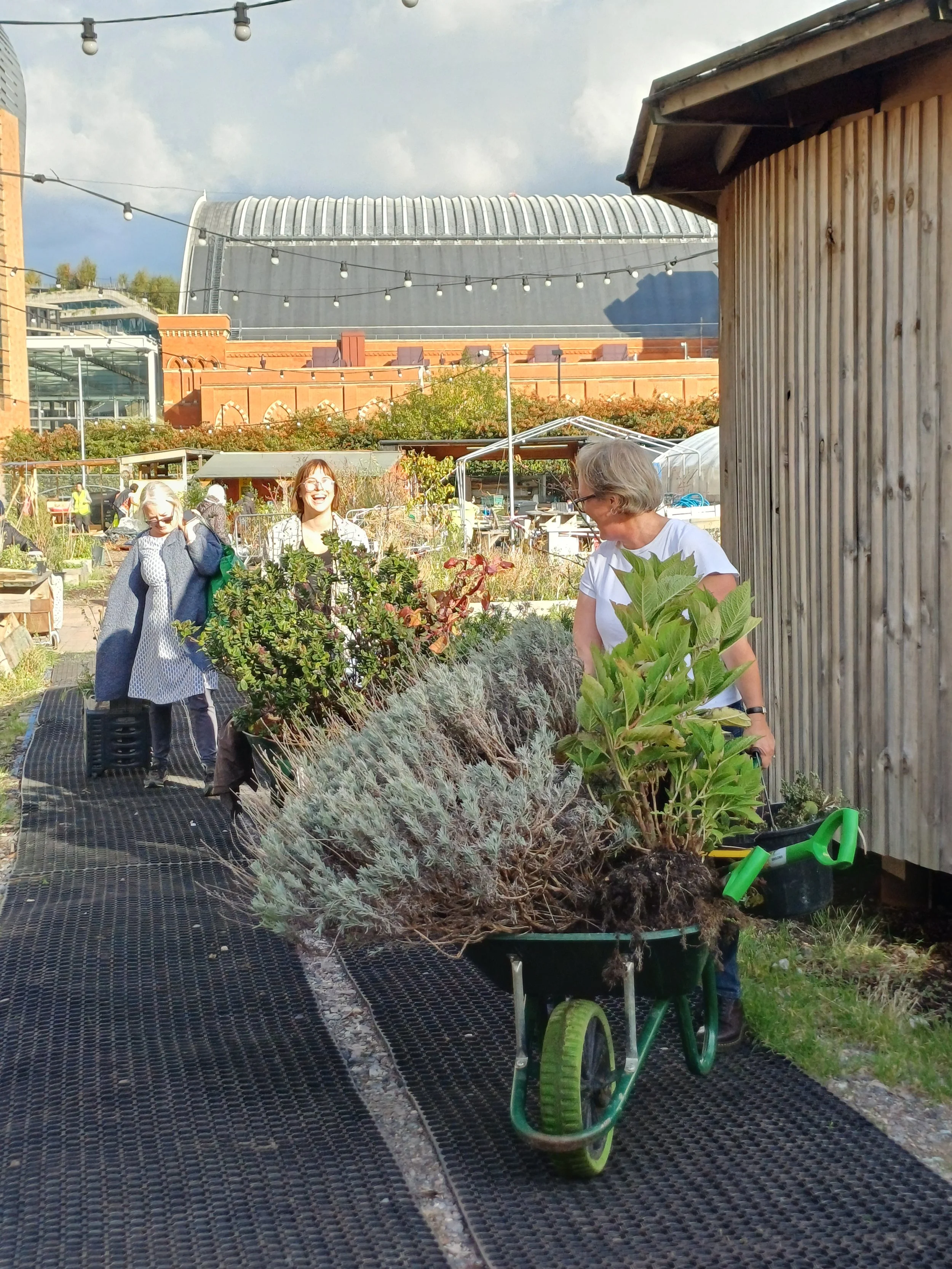
The garden is set up for the Great Giveaway, with people collecting plants and appliances into trolleys and wheelbarrows
After six years in its Somers Town location, the Story Garden has officially left its site on Ossulston Street, but many of the buildings, planters, and materials have not reached the end of their lifespan. In moving, we wanted to ensure items did not go to waste, but were able to have a new lease on life in community spaces, schools and gardens across London. Reflecting on this process, we were inspired by the writing of Robin Wall Kimmerer in her book The Serviceberry: Abundance and Reciprocity in the Natural World
“Can we really save this? I mean who wants to use this?”
“I’m not even sure what it is…or how you use it?”
“I think someone could use it! Maybe to make a kind of outdoor display or art piece?”
“Ok, if you say so, add it to the giveaway pile!”
The above conversation - or some version of it - is a sneak peek into what packing up the Story Garden sounded like ninety percent of the time. So many of the objects, products and items we encountered could not make the move with us, but deciding where they should go was much trickier.
Taking stock: Inventory for Circularity
“Abundance is fueled by constantly circulating materials, not wasting them.” ― Robin Wall Kimmerer, The Serviceberry: Abundance and Reciprocity in the Natural World
If we wanted to avoid large amounts of waste, we needed to hatch a plan to manage the move. A first step was launching a site wide catalogue of all of our spaces and the materials within them. Doing this alongside full-time delivery of our programming was extremely challenging and deadlines slipped frequently. Often spaces would seem almost completely catalogued, only for a major donation of additional materials to arrive and the process would need to start again.
Imagine for a moment, trying to complete a deep clean and inventory of your kitchen, while someone is cooking a three course meal, another person is making a cup of tea and a new delivery of groceries arrives every two hours. It was far from simple but it was completely necessary! A major cornerstone of circular practice relies on understanding what resources you have and in what condition, so you can properly re-purpose or re-use them. A key learning? We need to be more mindful of the items and materials we bring into our spaces, how we store them and re-distribute them when they are no longer needed - regular full site inventories would have made this move much easier!
Making Connections: Distributing the wealth
Over the years, the Story Garden’s size had allowed us to say yes to many donations and create a resource library for ourselves and others of quality materials that could be repurposed, used for building and distributed slowly as needed over the years. Having accumulated this amazing collection, we needed to share more generously than ever before because of a hard deadline of Autumn 2025. Thankfully, we built relationships over the years with likeminded organisations and could rely on them.
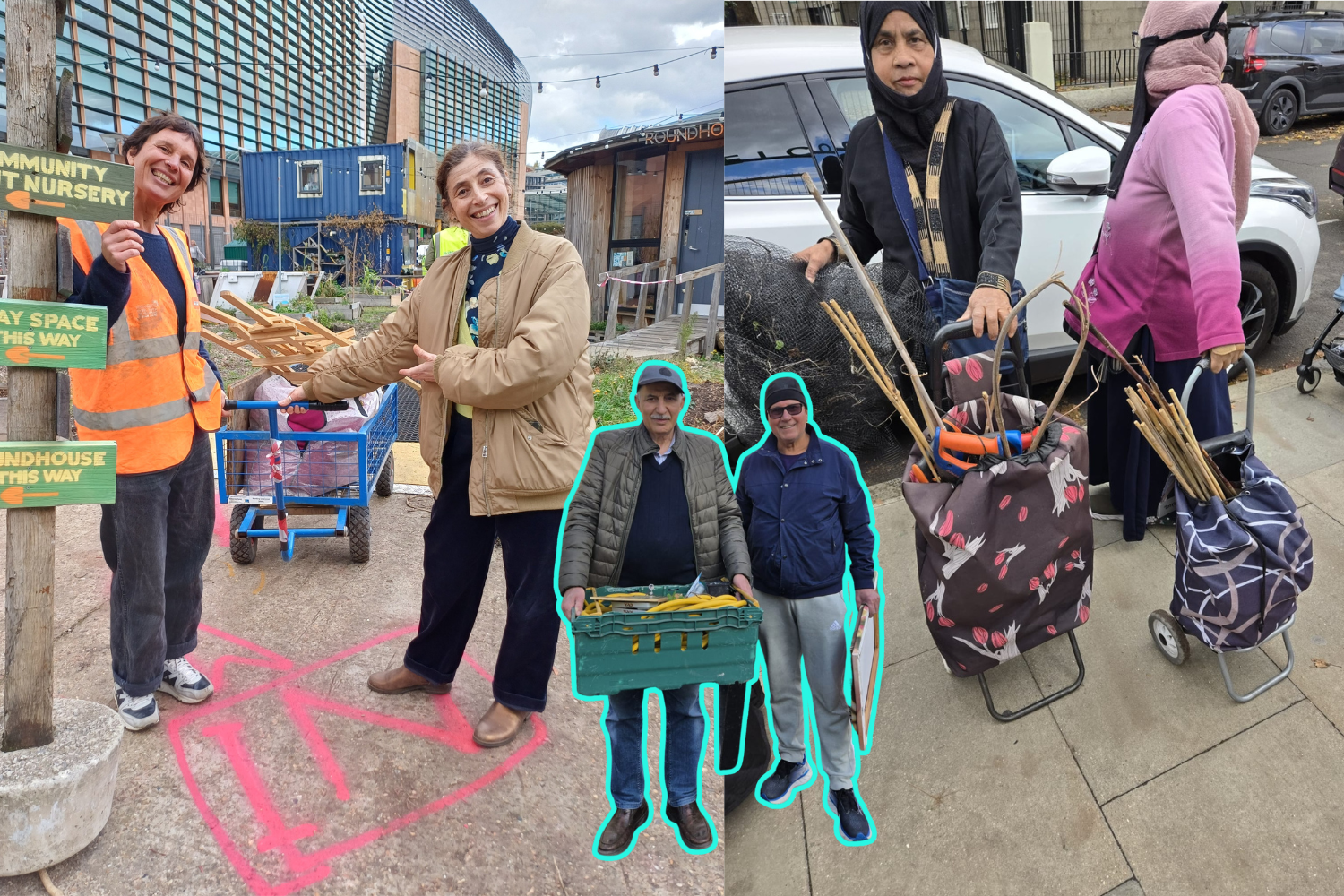
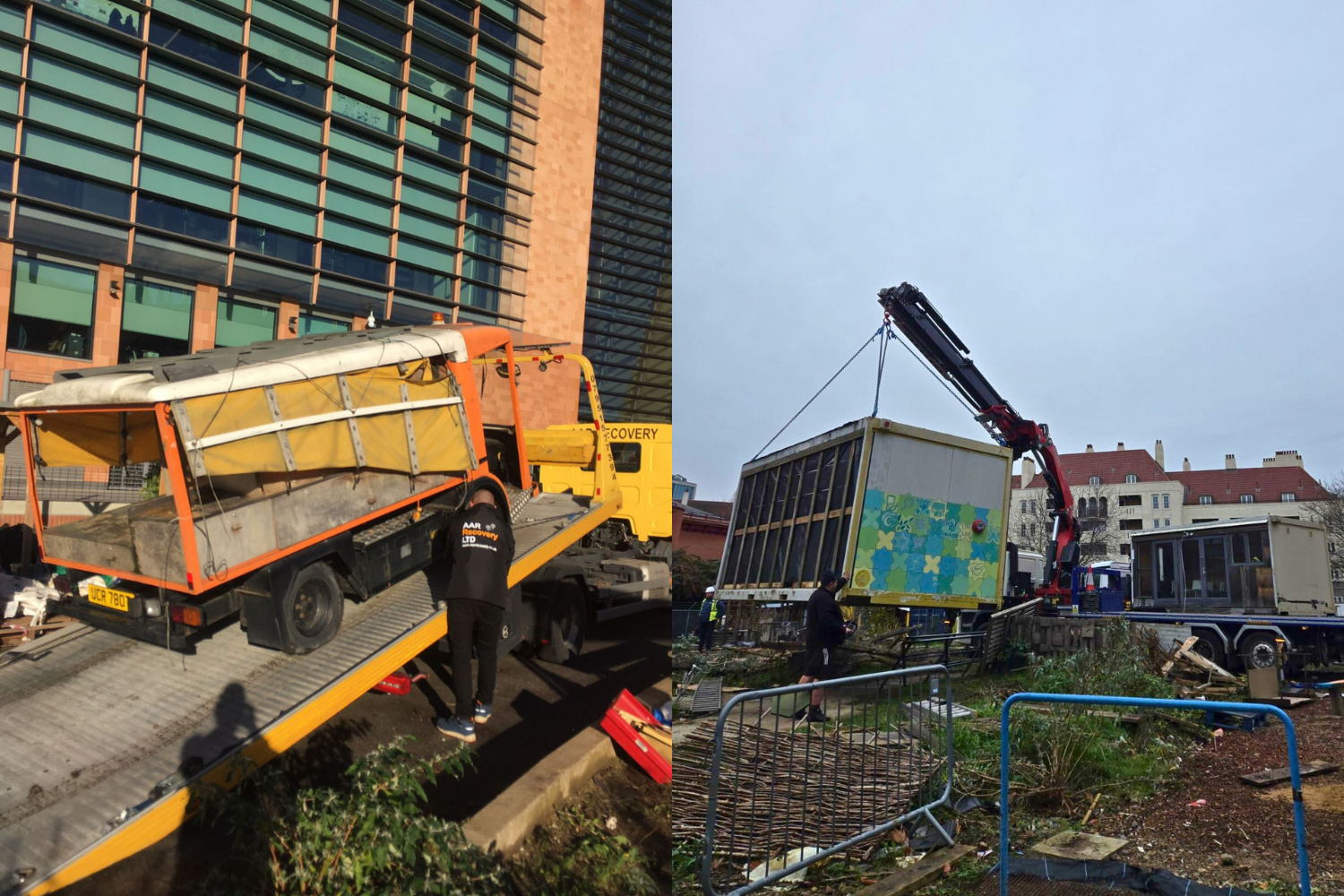
Eventually, with an (ever-changing) mega list of resources, we began contacting organisations and long-time community collaborators about our big move. We wanted resources to go where they were needed. The largest items and structures were showcased first, since these were the hardest to transport. Major structures like the polytunnel, classroom, kitchen and offices found new homes and were earmarked for relocation after our closure. Other larger items like the fridge unit and oven from our kitchen were similarly tagged and set aside for their new homes.
Local gardeners who had growing plots in the Story garden and around Somers Town (our Community Growers crew), were given priority access to some of the trees, plants and outdoor furniture. It is always difficult to figure out how best to manage resource distribution. We tried to prioritize local organisations, groups and schools in Somers Town and the local area, followed by charities, community groups and CIC’s who did similar work. It was by no means a perfect process and we have since had multiple conversations internally about how we might manage a similar system differently in the future. Where organisations could afford to pay for items, we encouraged them to donate, to help cover some of the costs of closing down the site, but most items were distributed for free.
Shop for Free : Great Giveaway Days
“In a gift economy, wealth is understood as having enough to share, and the practice for dealing with abundance is to give it away. In fact, status is determined not by how much one accumulates, but by how much one gives away.”
Robin Wall Kimmerer, The Serviceberry: Abundance and Reciprocity in the Natural World
While it was gratifying to find homes for the buildings and big items, there were smaller and more peculiar items that still needed homes. What to do with bespoke clay sculptures, sunshades, a decommissioned milk float, dozens of planting trays, piles of wood and easels? We decided an open day format might work best.
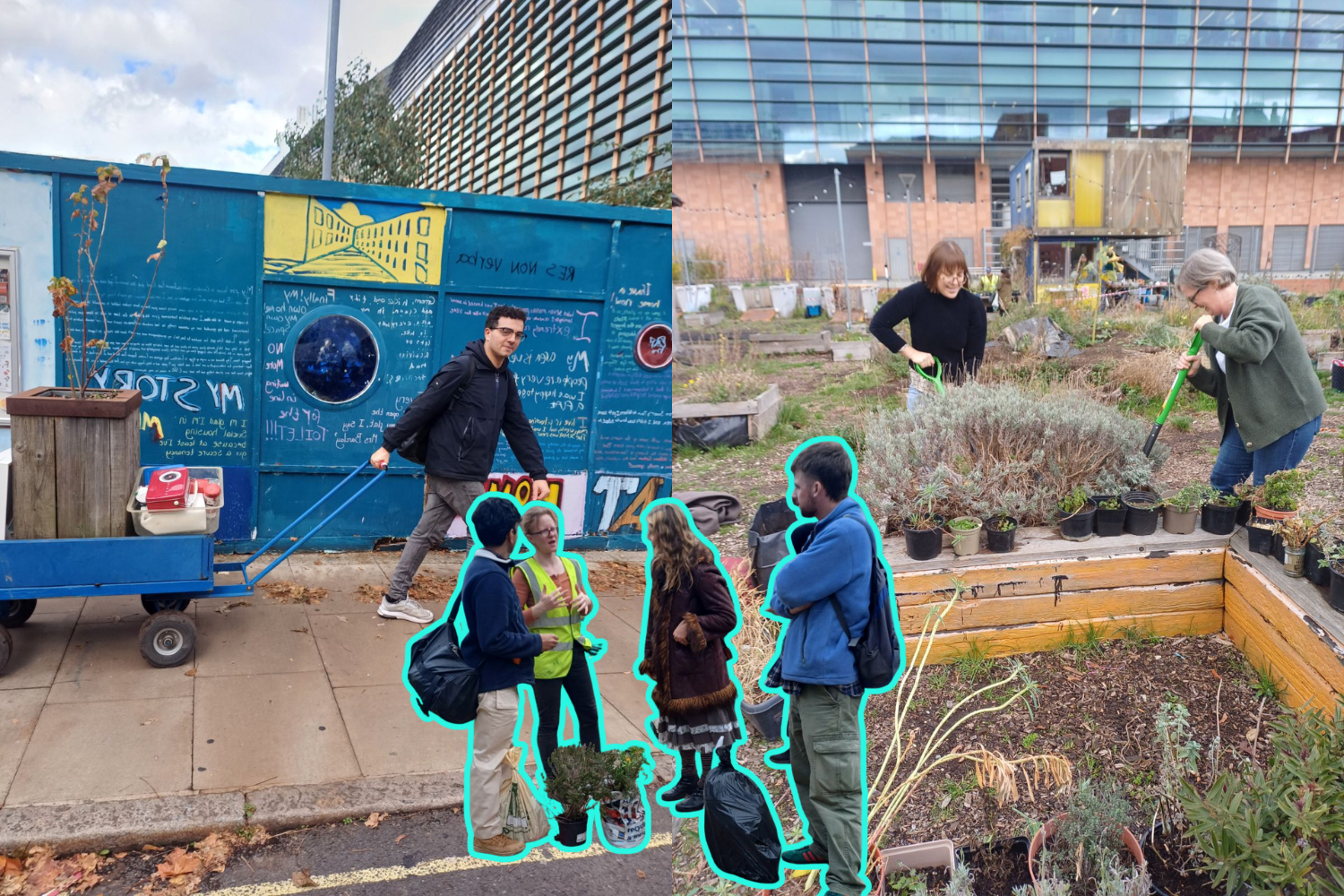
The garden closed its gates to the public in September 2025 but re-opened for a few public “Great Giveaway Days” in October where people were encouraged to come and shop the selection of items not moving with us. This included lots of plant material and gardening related supplies but also miscellaneous educational materials, pallets of slate in perfect condition, clay and wood perfect for small scale building projects. We developed a coloured tape system to mark items that were already claimed, had staff in high vis ready to help, and provided loans of trolleys and wheelbarrows for transport. We had no idea how many people might show up, but we decided to manage numbers by opening the gates to the public in phases - and this proved essential!
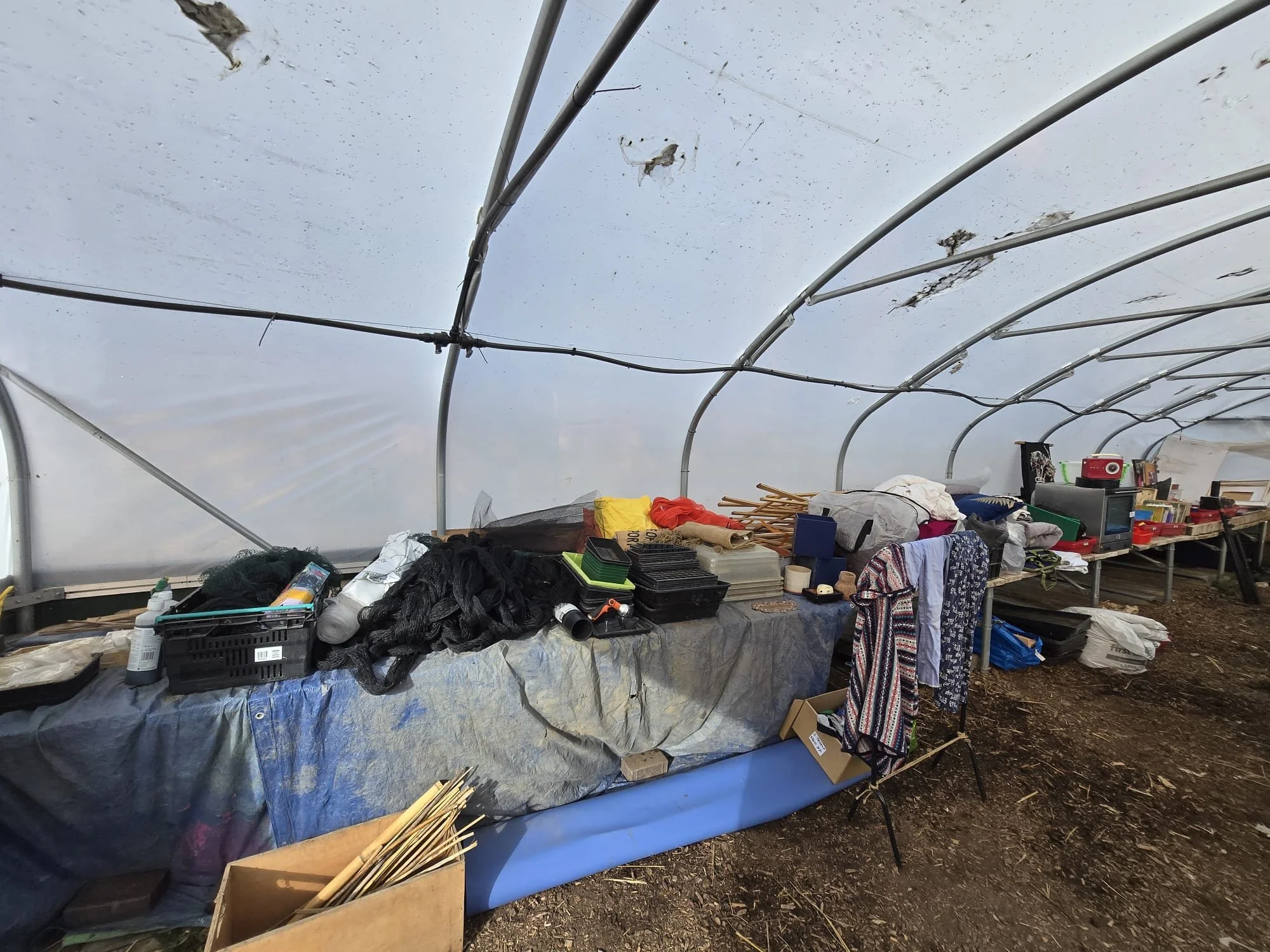
We set up the garden into zones with a free ‘shop’ in the polytunnel with smaller items: art supplies, irrigation supplies, trays, kitchen equipment, building materials, paints, netting hoops, office supplies, etc that people could pick up in their hands. Larger items (like tables, benches, planters and IBCs) were left in situ, and if not already marked with a special colour of tape, were available to claim. For plants, we loaned garden tools and pots so folks could dig up and transport plants. What a triumph it was to see wheelbarrows full of happy strawberries, raspberries, Hebes, lavender, roses and more heading out to new homes. These days were jubilant -a wonderful reminder of the joy that the garden had brought to so many and would continue to do.
Some fun facts:
By the numbers: We distributed hundreds of plants, supplies, materials and buildings to 90 local residents and over 30 Charities, Schools, CICs. In total, elements from the Story Garden have ended up on over 200 sites of relocation!
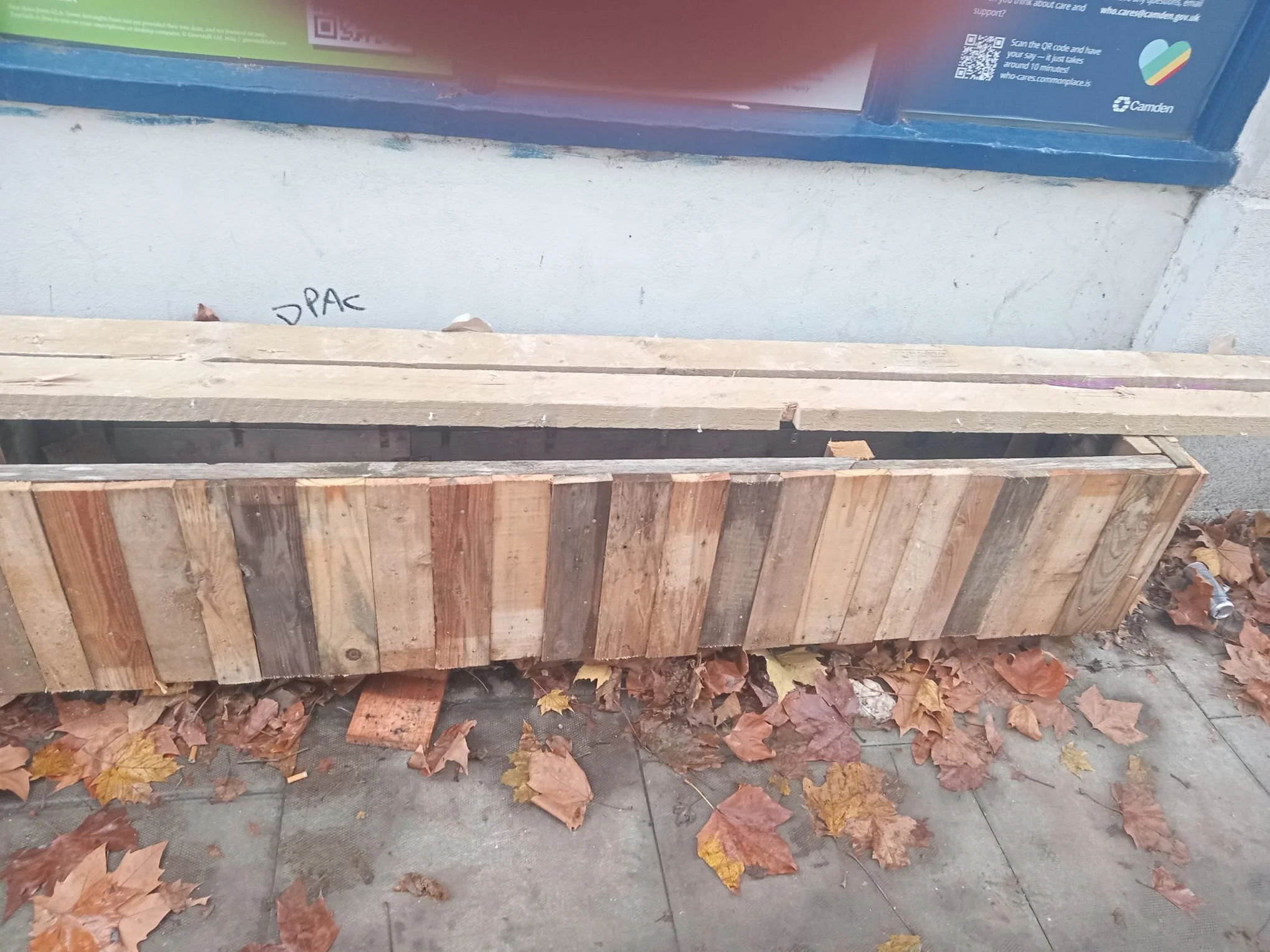
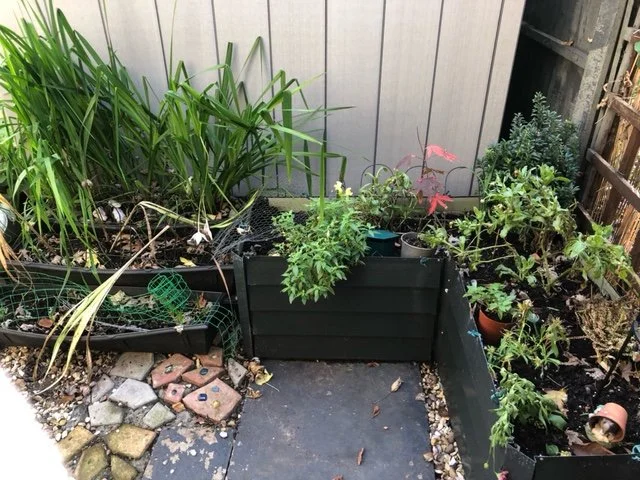
Closest relocation: Planters from the garden can be spotted out front the People’s Museum Somers Town, approximately 150 metres from us.
Most creative re-use (so far): Walthamstow Wildside Community Garden took the wood from our Community Growers Shed and turned it into a Chicken Coop
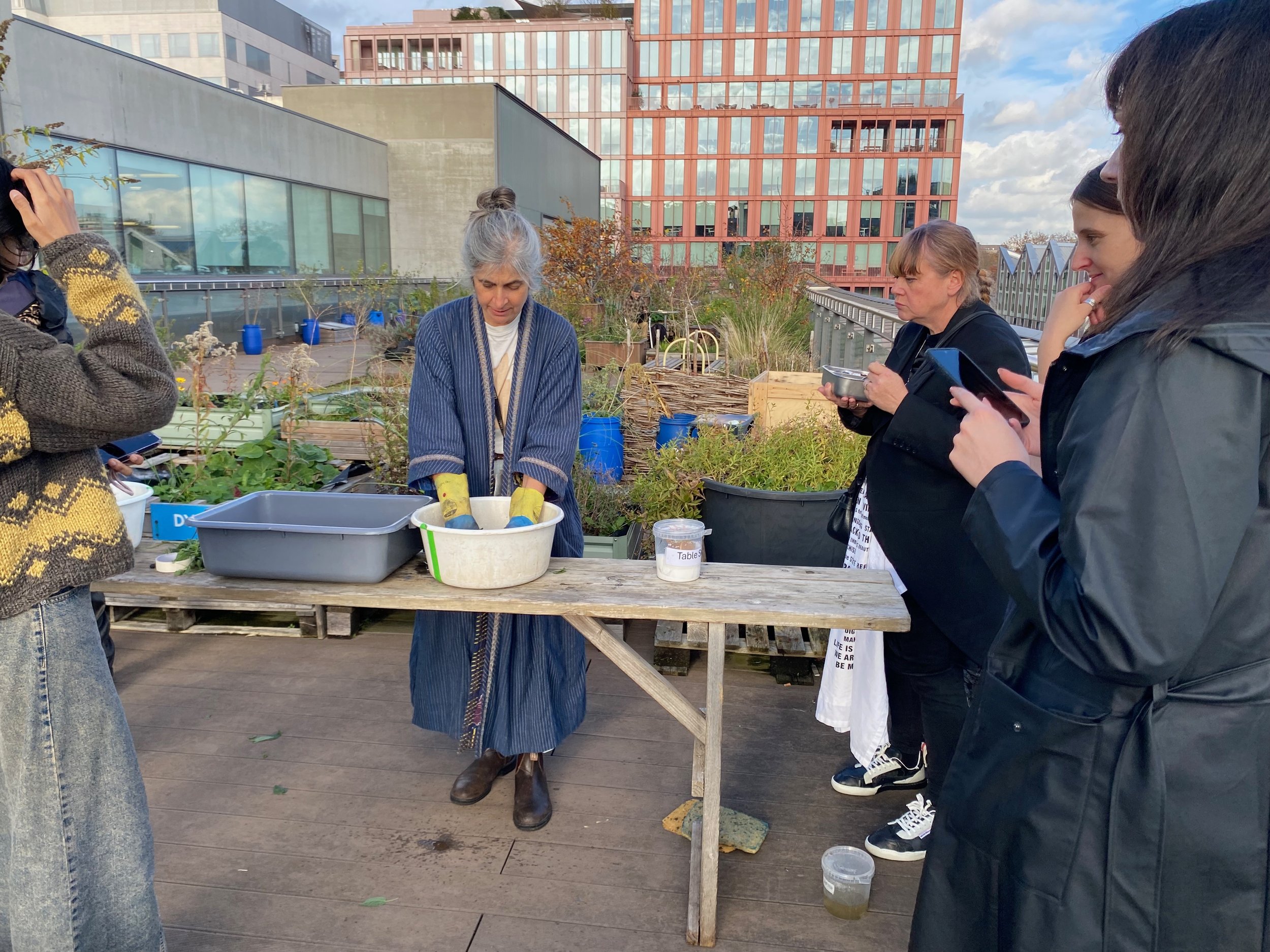
Up on high: Some of our outdoor benches and tables went to a rooftop dye garden run by CSM.
Down below: Kings Head Theatre took some shade loving plants for their subterranean planters.
Some of the top recipients of materials were:
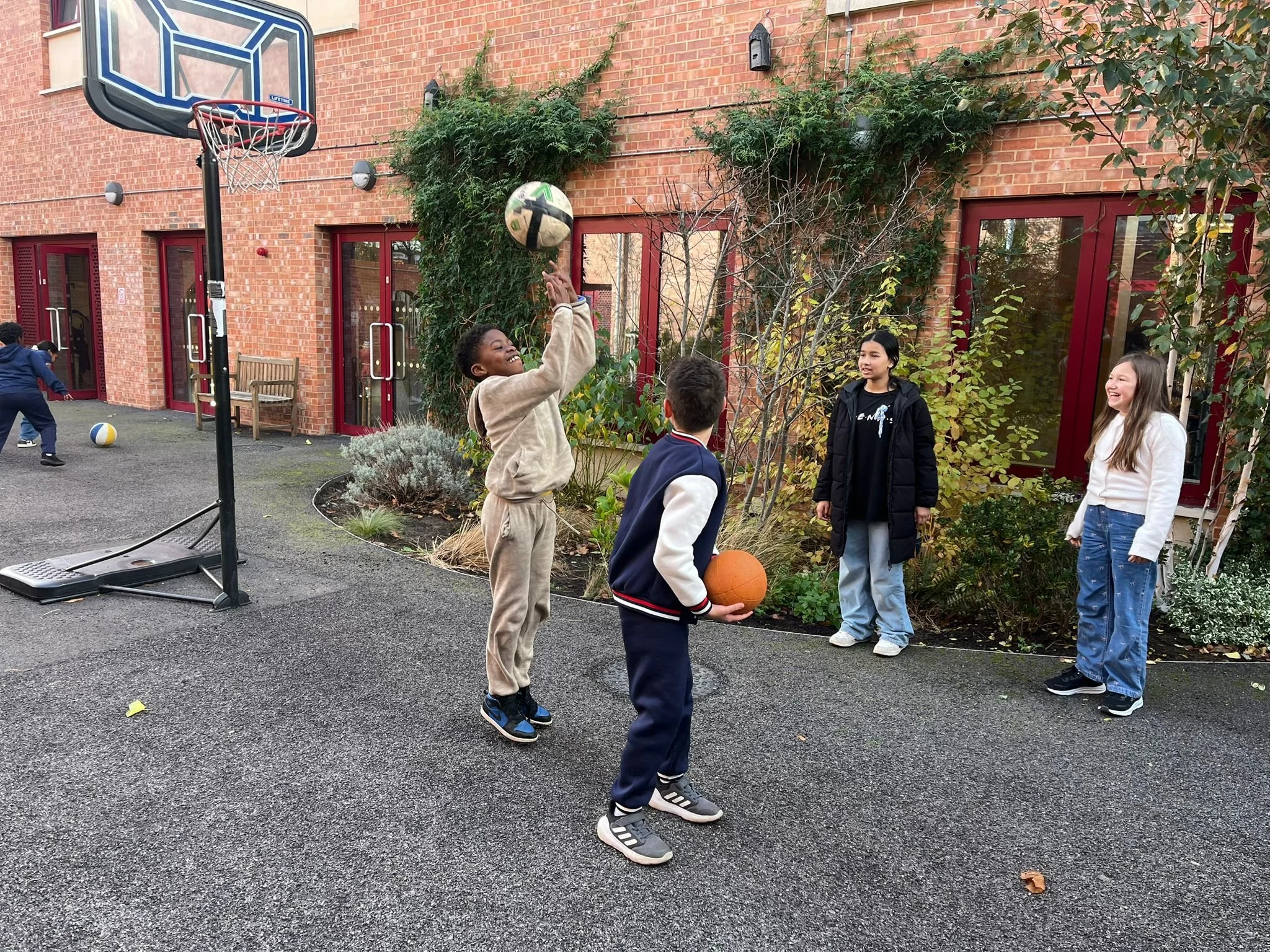
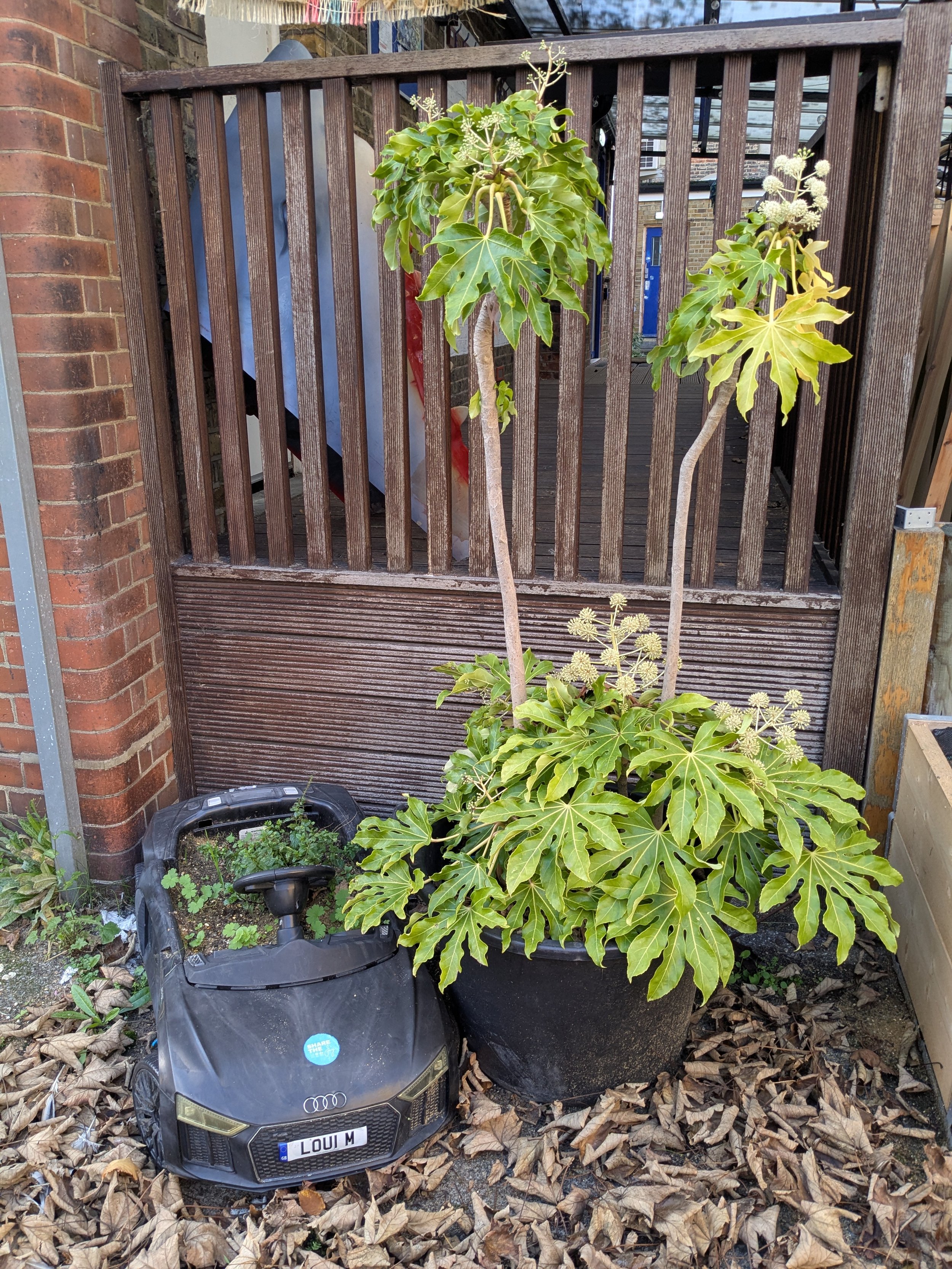
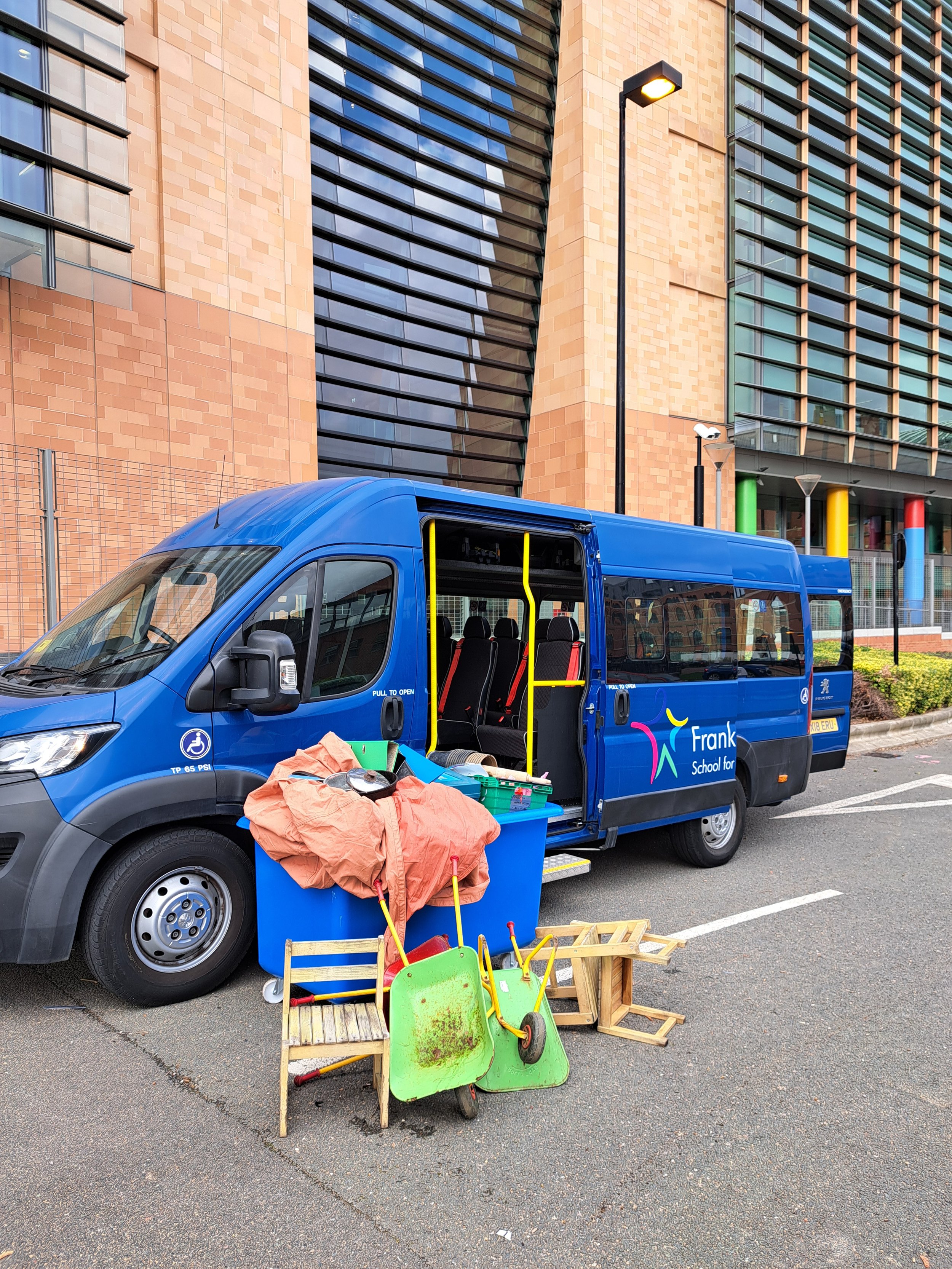
Maria Fidelis School, Ealing Community Garden, King's Head Theatre, Castlehaven Community Centre, Cultivate Collindale, Life After Hummus, Central Saint Martins, Scene and Heard, Populo Living, Sitopia Farm, Plot 10, Allen's Community Garden, Islington Council Estate Gardener, Green Man Street Community Garden, Edible Landscapes, Girdlestone Food Cooperative (Foodbank), Frank Barnes School, Reapers Queer Allotment, Hargrove Hall community garden, Goldington Estate, Pearson street Adventure Playground, Camden Collective, Regent High, St. Pancras and Somers Town Living Centre, People's Museum, Zad Cafe, Local Somer's Town Residents (Scroll through the gallery at the bottom of the blog to see some pictures of plants, benches and more in some of their new homes.)
The Story Continues
“The currency in a gift economy is relationship, which is expressed as gratitude, as interdependence and the ongoing cycles of reciprocity. A gift economy nurtures the community bonds that enhance mutual well-being; the economic unit is “we” rather than “I,” as all flourishing is mutual.” ― Robin Wall Kimmerer, The Serviceberry: Abundance and Reciprocity in the Natural World
It was an obvious choice for us to giveaway items that we could no longer use and our move was a crucial moment to re-evaluate how, as an organisation, we had accumulated more than we needed. It can be more difficult to create these moments for reflection and redistribution without a catalyst like a site change, but we want to build this practice into our annual cycle moving forward. In reading about this process, maybe you can think about the resources and materials in your own home, work and community spaces that could be better used by a friend, a colleague or community member. I hope you are able to see less scarcity and more abundance and that you feel inspired to turn to those around you; to gift and to receive, to flourish together.
The story of Story Garden isn’t finished. The garden will continue on from the new site on York Way, with construction due to complete in 2026 (join a build day to see it now!). Eventually a small green space will also re-open on the same site once construction is completed on the British Library Extension. However, in the meantime, we are so pleased to think that pieces of Story Garden can now be found all over London, in the plants, benches, art, buildings and more that are nestled into new homes.

Notes from the Garden
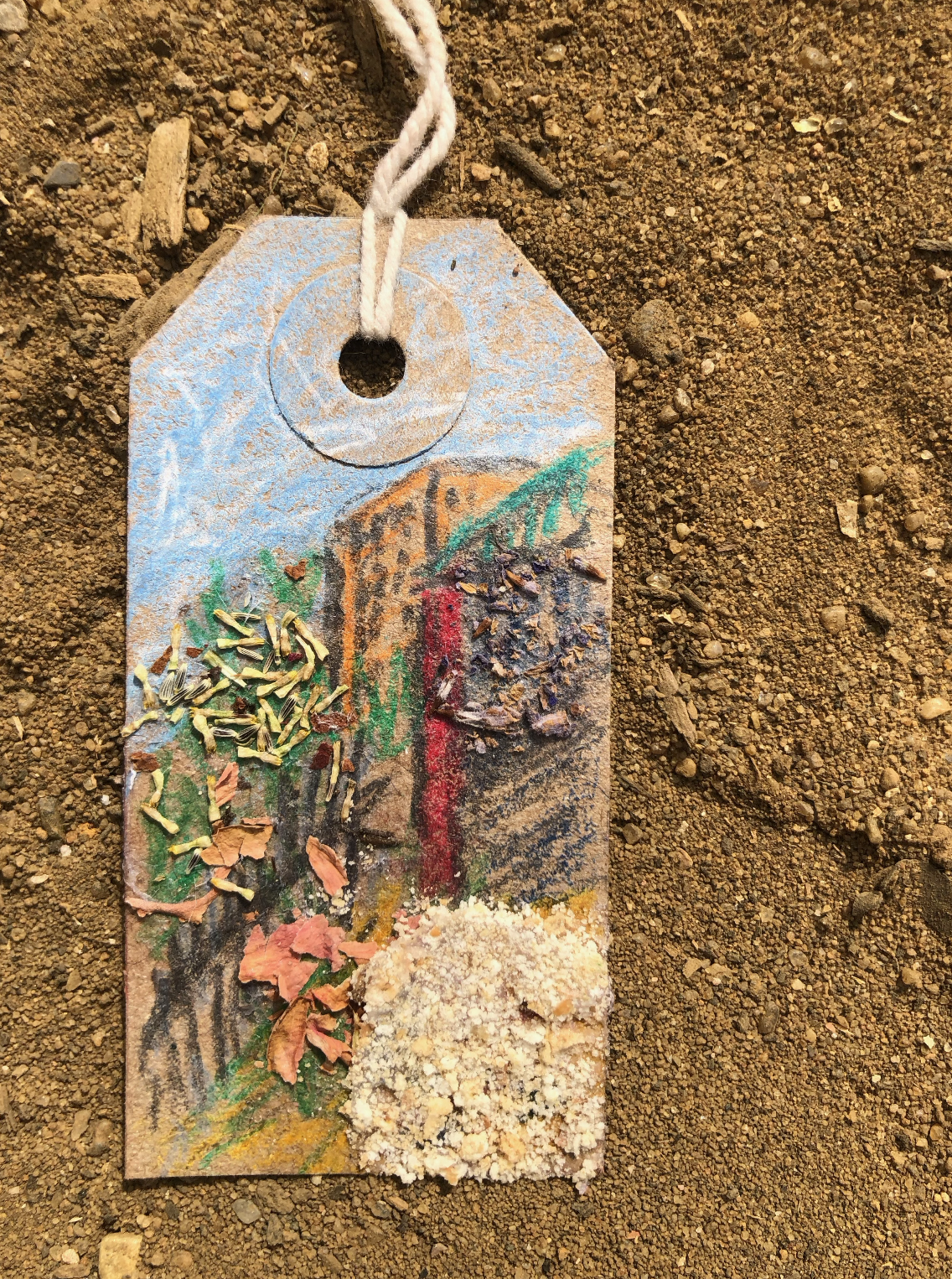
In this story, Linda goes back to December 2023 where school children from Edith Neville and Rewilding Children’s Imaginations funders , Pia Jones and Sarah Pimenta, took a deep dive into London lost rivers. A story about how a project from the past can still inform programmes in our new Story Garden.